Are Corrosion and Rust the Same Thing?
CORROSION BASICS · RUST · MATERIALS PROTECTION
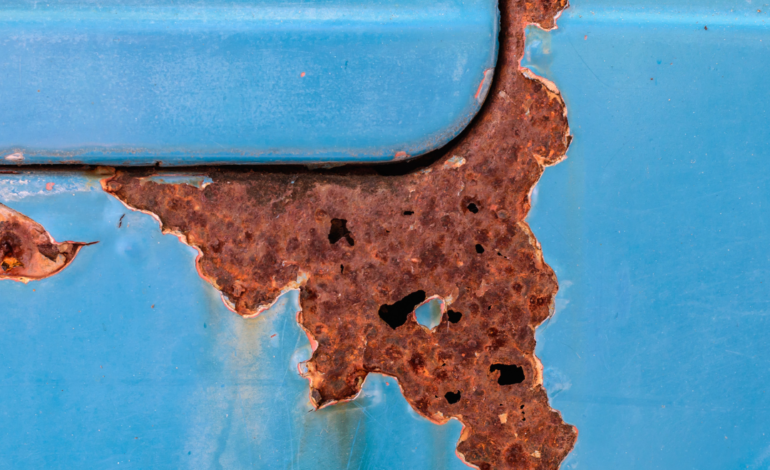
Rust and corrosion are related, but they are not the same thing. Rust is a specific form of corrosion associated with iron and iron-containing alloys such as carbon steel.
Corrosion is the broader process of material deterioration caused by interaction with the surrounding environment. Different metals can corrode in very different ways, producing different corrosion products, appearances, and patterns of damage. Understanding what type of deterioration is occurring is essential when selecting an appropriate prevention or control strategy.
THE KEY DISTINCTION
Rust is corrosion.
BUT
Not all corrosion is rust.
Rust specifically involves iron-containing materials. Other metals can corrode without ever forming rust.
AT A GLANCE
Corrosion vs. rust
- Corrosion is the broader deterioration process caused by interaction between a material and its environment.
- Rust refers to corrosion products that form on iron and iron-containing alloys.
- Corrosion can appear as uniform attack, pits, cracks, localized damage, surface films, or other forms.
- The correct prevention strategy depends on the material, environment, corrosion mechanism, and service conditions.
What Is Corrosion?
Corrosion is the deterioration of a material as a result of chemical or electrochemical interaction with its environment. In materials-protection work, the term is most commonly associated with the deterioration of metals and alloys.
The corrosion process depends on the material and its surroundings. Moisture, oxygen, chlorides, chemicals, temperature, electrical contact with other materials, stress, and many other factors can influence how corrosion develops.
Different materials can also form very different surface products. Iron may develop familiar reddish-brown rust, aluminum may form oxide films or white corrosion products under some conditions, and copper can develop characteristic surface patinas.
NOT ALL SURFACE CHANGE MEANS THE SAME THING
Color alone does not identify a corrosion mechanism. Material, environment, corrosion morphology, exposure conditions, and inspection findings all matter when evaluating deterioration.
Common Forms of Corrosion
Corrosion does not always occur evenly across a surface. Recognizing the form of attack can help engineers, inspectors, and asset owners understand what may be driving the deterioration and how it should be managed.
01 · UNIFORM CORROSION
Relatively even material loss across a surface
Uniform corrosion produces broadly distributed attack that can result in gradual thinning. Atmospheric corrosion of unprotected carbon steel can sometimes develop in this manner.
02 · GALVANIC CORROSION
Electrically connected dissimilar materials
Galvanic corrosion can occur when dissimilar conductive materials are electrically connected in the presence of an electrolyte. The more anodic material may experience an accelerated corrosion rate.
03 · CREVICE CORROSION
Localized attack in shielded areas
Crevice corrosion can develop in confined or shielded locations such as beneath gaskets, washers, deposits, joints, or other areas where local chemistry differs from the surrounding environment.
04 · PITTING CORROSION
Highly localized penetration
Pitting corrosion produces localized cavities or pits. Although the surrounding surface may appear relatively unaffected, individual pits can penetrate deeply into the material.
05 · INTERGRANULAR CORROSION
Preferential attack near grain boundaries
Intergranular corrosion occurs preferentially at or near grain boundaries when metallurgical conditions make those regions more susceptible to attack.
06 · STRESS CORROSION CRACKING
Cracking involving stress and a susceptible environment
Stress corrosion cracking can occur when a susceptible material experiences tensile stress while exposed to a specific corrosive environment. The exact combination required depends on the material and service conditions.
IDENTIFY BEFORE YOU TREAT
Identify the Material
↓
Understand the Environment
↓
Determine the Corrosion Mechanism
↓
Select the Appropriate Control Strategy
What Is Rust?
Rust is the common term for iron-containing corrosion products that form when iron or iron alloys corrode in environments where moisture and oxygen are available.
The familiar reddish-brown material commonly called rust consists of iron oxides and related corrosion products. Its exact composition and appearance depend on environmental conditions and the corrosion process.
Because rust is associated with iron, a corroding aluminum, copper, zinc, or other nonferrous metal is not technically “rusting,” even though it may still be experiencing corrosion.
Corrosion vs. Rust: What’s the Difference?
CORROSION
A broad deterioration process
Can affect many different metals and alloys and may take multiple forms depending on the material and environment.
RUST
A specific corrosion product
Associated specifically with corrosion of iron and iron-containing alloys such as carbon steel.
APPEARANCE
Corrosion can look very different. It may involve thinning, pits, cracks, surface films, discoloration, deposits, or other visible and nonvisible forms of damage.
RUST APPEARANCE
Rust is often reddish-brown, although iron corrosion products can vary in color, chemistry, texture, and appearance depending on the environment.
Why the Distinction Matters
Calling every form of corrosion “rust” can oversimplify the problem. Different corrosion mechanisms can require very different approaches to inspection, prevention, mitigation, and repair.
For example, a coating problem on carbon steel, galvanic attack between dissimilar metals, pitting on stainless steel, and stress corrosion cracking may all involve corrosion—but they should not automatically be managed in the same way.
How Corrosion Can Be Prevented or Controlled
There is no universal corrosion-control method. Effective protection starts with understanding the asset, material, environment, expected service life, corrosion mechanism, and consequences of deterioration.
PROTECTIVE COATINGS
Create a barrier between the material and environment
Properly selected and applied protective coating systems can help isolate a substrate from water, oxygen, chemicals, salts, or other conditions that contribute to corrosion. Performance depends on factors such as surface preparation, coating selection, application, service environment, inspection, and maintenance.
GALVANIZING
Protect iron or steel with zinc
Galvanizing applies a zinc coating to iron or steel. The zinc provides barrier protection and can also provide sacrificial protection to exposed steel under appropriate conditions.
CATHODIC PROTECTION
Control electrochemical corrosion
Cathodic protection can be used to reduce corrosion of a metallic structure by making it the cathode of an electrochemical cell.
- Galvanic anode systems use a more active material that preferentially corrodes.
- Impressed current systems use an external power source to provide protective current.
MATERIAL SELECTION
Choose materials for the actual environment
Corrosion-resistant alloys and nonmetallic materials can be valuable in some applications, but suitability depends on the specific environment, temperature, loading, chemical exposure, fabrication, cost, and other design requirements.
DESIGN
Design out avoidable corrosion risks
Good design can reduce areas that trap water or contaminants, improve drainage and inspection access, avoid unfavorable dissimilar-metal combinations, and make protective systems easier to maintain.
ENVIRONMENTAL CONTROL
Change the conditions when practical
Depending on the application, controlling humidity, condensation, contaminants, temperature, chemical exposure, or water ingress may help reduce corrosion risk.
Preventing Rust on Iron and Steel
Because rust is a corrosion problem specific to iron-containing materials, many rust-prevention strategies focus on separating the metal from corrosive environments or modifying its electrochemical behavior.
COATINGS
Separate steel from the environment
Protective coating systems can limit exposure to moisture, oxygen, salts, and other corrosive substances when properly designed and maintained.
INHIBITORS
Modify the corrosion environment
Corrosion inhibitors may be used in suitable systems to reduce corrosion reactions. Selection, concentration, compatibility, safety, and environmental requirements depend on the application.
INSPECTION
Find deterioration early
Routine inspection can identify coating damage, corrosion products, section loss, water accumulation, or other conditions that may require further evaluation.
MAINTENANCE
Maintain protective systems
Cleaning contaminants, repairing damaged coatings, controlling water accumulation, and addressing developing corrosion can help limit further deterioration.
What About Stainless Steel and Weathering Steel?
Stainless steels contain chromium and can develop a thin passive oxide film that provides significant corrosion resistance in suitable environments. Stainless steel is not corrosion-proof, however, and certain grades can still experience pitting, crevice corrosion, stress corrosion cracking, or other forms of attack under unfavorable conditions.
Weathering steels are designed to develop a relatively stable protective patina under appropriate exposure conditions. Their performance depends strongly on environment and detailing, and they are not suitable for every application.
CORROSION-RESISTANT DOES NOT MEAN CORROSION-PROOF
Material performance always depends on the environment.
Alloy selection, exposure conditions, fabrication, design, contaminants, temperature, maintenance, and other factors can influence whether a material provides the expected corrosion resistance.
Understanding the Problem Comes First
Rust may be the most recognizable sign of metal deterioration, but it represents only one part of the much larger corrosion picture. Different materials, environments, and corrosion mechanisms create different risks—and require different responses.
Effective corrosion management begins by identifying what material is deteriorating, determining why it is occurring, assessing the consequences, and selecting a protection strategy appropriate for the asset and its service environment.
BOTTOM LINE
Rust is one visible form of corrosion. Corrosion itself is a much broader materials-protection challenge.
LEARN THE FUNDAMENTALS
Explore the AMPP Corrosion Reference Library
Build your understanding of corrosion mechanisms, prevention methods, materials protection, cathodic protection, protective coatings, and other corrosion-control topics.
EXPLORE MORE
Corrosion Basics & Protection
Corrosion Reference Library →
Cathodic Protection →
Basic Corrosion Course →
AMPP Education →
AMPP Standards →

Have photos or videos from the field? Submit them to AMPP →