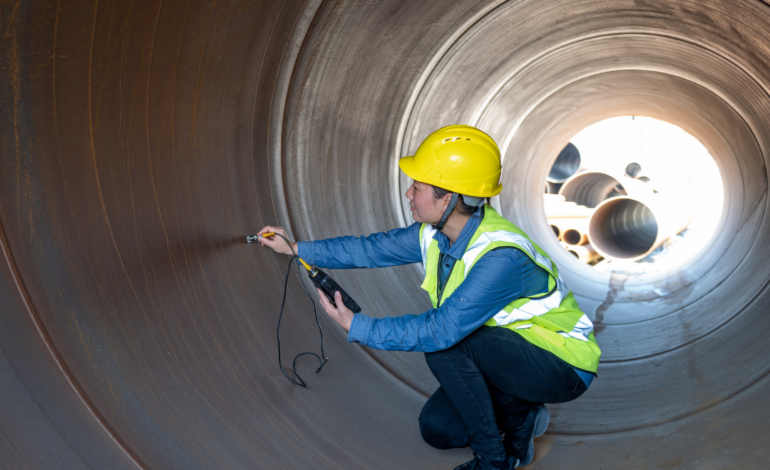
Preventing Corrosion in Storage Tanks
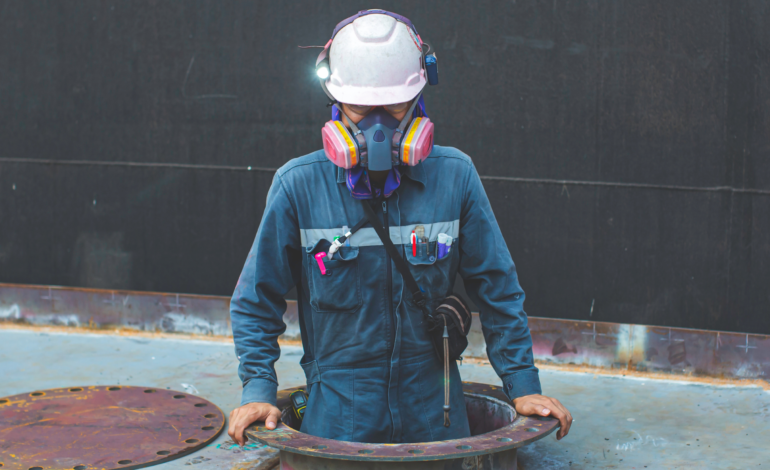
STORAGE TANKS · COATINGS & LININGS
Storage tank corrosion can be controlled through a combination of protective coatings and linings, proper surface preparation, inspection, maintenance, and targeted repair. The right approach depends on what the tank stores, the substrate, environmental exposure, operating conditions, and the type and location of corrosion.
Ceramic coatings, epoxy linings, and localized epoxy repair systems are three approaches used in different tank environments. Real-world projects featured in CoatingsPro show how these technologies can be matched to specific corrosion challenges.
AT A GLANCE
Three approaches to storage tank corrosion protection
- Ceramic coating systems may be considered for demanding chemical, abrasion, or immersion environments.
- Epoxy linings are widely used to isolate steel from stored liquids and may be formulated for potable-water service.
- Localized epoxy repair materials can address selected damaged areas when repair is appropriate.
- Surface preparation matters across every coating and lining technology.
- System selection must match service conditions rather than relying on coating chemistry alone.
IN THIS ARTICLE
Why tanks corrode · Ceramic coatings · Epoxy linings · Localized epoxy repairs · Selecting a system · Common questions
A tank holding wastewater, drinking water, crude oil, chemicals, or process liquids has a simple job: contain its contents safely. Corrosion can make that job much more difficult.
Metal loss, coating deterioration, corrosion at seams or tank bottoms, and other forms of degradation can lead to repairs, downtime, leaks, or larger integrity concerns. That makes corrosion protection an important part of tank design, operation, inspection, and maintenance.
CoatingsPro Magazine has documented a range of real-world tank protection projects. Three of those examples illustrate how different coating and repair technologies can address different problems.
Why Is Preventing Corrosion in Storage Tanks So Challenging?
Storage tanks can experience corrosion from both the environment outside the tank and the material stored inside it. Conditions vary dramatically depending on service, location, tank design, materials, and maintenance history.
ENVIRONMENT
Moisture & Oxygen
Water, humidity, condensation, and atmospheric exposure can create conditions that support corrosion on susceptible metallic surfaces.
SERVICE
Chemical Exposure
Stored liquids can create very different chemical environments depending on composition, concentration, contaminants, temperature, and other operating conditions.
OPERATION
Temperature Changes
Heating, cooling, condensation, and repeated thermal cycling can affect materials, coating systems, and the conditions that influence corrosion.
BARRIER
Coating Damage
Holidays, mechanical damage, poor adhesion, aging, or other coating defects can expose the underlying substrate to the service environment.
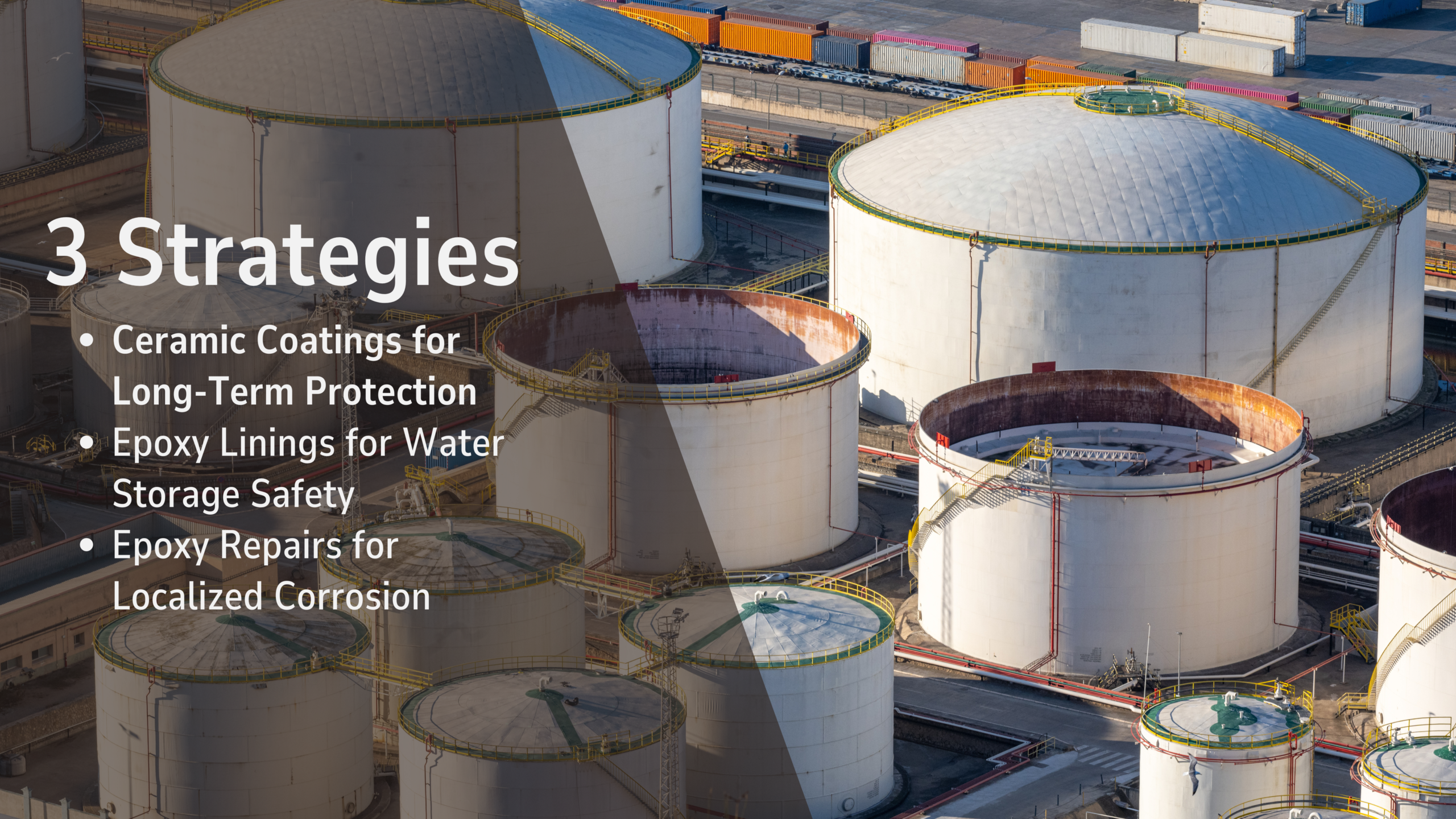
THE BASIC PRINCIPLE
The coating is only one part of the protection system.
Product selection, surface preparation, application, cure, inspection, maintenance, and service conditions all influence whether a tank coating or lining performs as intended.
1. Ceramic Coatings for Demanding Tank Environments
Some tanks operate in environments where abrasion, immersion, aggressive chemicals, sediment, or other severe conditions place significant demands on the protective system.
One technology used for certain applications is chemically bonded phosphate ceramic (CBPC) coating. These inorganic coating systems interact with properly prepared steel in a different way than conventional polymer coatings and may offer useful properties for specific severe-service environments.
FROM COATINGSPRO
Ceramic Coating Protects a Wastewater Tank
CoatingsPro documented the use of a CBPC coating system on a wastewater storage tank exposed to demanding service conditions.
What to consider with ceramic coatings
- Service environment: Confirm that the specific coating chemistry is suitable for the stored material and operating conditions.
- Surface preparation: Follow the manufacturer’s preparation requirements closely to support proper bonding and performance.
- Abrasion and immersion: Consider mechanical wear, sediment, chemicals, and continuous immersion when evaluating a system.
- Application requirements: Equipment, application technique, film thickness, cure, and inspection requirements vary by product.
2. Epoxy Linings for Water Storage Tanks
Water storage presents another set of challenges. In potable-water service, a lining must provide corrosion protection while also meeting applicable requirements for materials that come into contact with drinking water.
Epoxy systems are commonly used for steel water tanks because properly selected formulations can provide adhesion, barrier protection, chemical resistance, and durability. Product approval, surface preparation, application conditions, cure, and inspection all need to match the intended potable-water service.
FROM COATINGSPRO
Epoxy Lining Protects Texas Water Tanks
CoatingsPro examined the use of an approved high-solids epoxy lining on municipal water-storage tanks in Texas.
What to consider with potable-water epoxy linings
- Approvals and compliance: Confirm that the product meets the applicable requirements for the intended drinking-water application.
- Chemical and immersion resistance: Select a formulation designed for continuous service in the tank environment.
- Surface preparation: Proper substrate preparation is essential to adhesion and long-term lining performance.
- Cure and return to service: Follow the specified cure requirements before filling or returning the tank to operation.
3. Epoxy Repair Systems for Localized Corrosion
Not every tank maintenance problem requires complete recoating. When corrosion or coating damage is limited to a specific area, an engineered localized repair may be an option if the substrate remains suitable and the repair system is appropriate for the condition.
Tank perimeters, seams, welds, interfaces, and other details can be vulnerable because they may collect moisture or experience environmental and mechanical stresses differently than broad flat surfaces.
FROM COATINGSPRO
Epoxy Paste Repairs an Oil Tank Perimeter
CoatingsPro documented a project in Colombia where an epoxy repair material was used around the perimeter of an oil storage tank.
What to consider with localized repairs
- Identify the cause first: Repairing the surface without addressing the source of corrosion may only postpone recurrence.
- Assess the substrate: Confirm that remaining material condition and structural integrity are appropriate for the proposed repair.
- Prepare the repair area correctly: Cleaning, profiling, edge treatment, and contamination removal affect adhesion.
- Use a compatible repair system: The repair material should be suitable for the existing coating, substrate, exposure, and operating conditions.
IMPORTANT
A coating repair is not a substitute for an integrity assessment. Significant metal loss, cracking, deformation, leaking, or other structural concerns may require engineering evaluation and repairs beyond the coating system.
How Do You Choose a Storage Tank Coating or Lining?
The best protective system is not simply the coating with the highest advertised performance. It is the system that fits the actual asset, environment, service conditions, installation constraints, and maintenance strategy.
What will the tank contain?
Consider chemistry, concentration, temperature, contaminants, immersion conditions, sediment, and whether the contents are potable or otherwise regulated.
What condition is the substrate in?
Existing corrosion, pitting, contamination, previous coatings, weld condition, concrete deterioration, and access can all affect preparation and system selection.
How much downtime is available?
Surface preparation, application, curing, inspection, and return-to-service requirements all affect the project schedule.
How will the system be inspected and maintained?
Think beyond initial installation. Inspection access, repairability, expected maintenance intervals, and future recoating should be part of the lifecycle plan.
THINK LIFECYCLE
A good tank protection strategy starts before corrosion appears.
Coating selection, design details, inspection, maintenance, timely repairs, and documentation all contribute to long-term corrosion control and asset performance.
Common Questions About Storage Tank Corrosion Protection
Quick answers about coatings, linings, repairs, and corrosion control for storage tanks.
What causes corrosion in storage tanks?
Storage tank corrosion can be influenced by moisture, oxygen, stored chemicals, contaminants, temperature, sediment, coating condition, tank design, and environmental exposure. Internal and external tank surfaces can face different corrosion mechanisms.
What coatings are used inside storage tanks?
Tank lining systems can include epoxy, ceramic, polyurethane, vinyl ester, and other technologies depending on the stored material and service environment. Product selection should be based on compatibility, exposure conditions, substrate, temperature, and applicable project requirements.
Are epoxy linings suitable for drinking-water tanks?
Some epoxy lining systems are formulated and approved for potable-water service. The specific product must meet applicable drinking-water requirements and be installed and cured according to its approved use and manufacturer instructions.
Can localized tank corrosion be repaired without recoating the entire tank?
In some situations, localized coating or corrosion damage can be addressed with a targeted repair system. The cause and extent of deterioration should first be evaluated to determine whether localized repair is appropriate or whether more extensive rehabilitation is required.
Why is surface preparation so important for tank coatings?
Protective coatings and linings rely on a properly prepared substrate to achieve the intended adhesion and performance. Rust, contamination, old coating, salts, moisture, or an unsuitable surface profile can contribute to coating failure.
BUILD YOUR COATINGS KNOWLEDGE
Learn How Protective Systems Are Selected, Applied, and Inspected
AMPP education and certification programs cover protective coatings, corrosion, inspection, surface preparation, application, and other skills used to protect storage tanks and industrial assets.
EXPLORE THE CASE STUDIES
See Storage Tank Protection in the Field
Ceramic Coating Protects Wastewater Tank →
Epoxy Lining Protects Texas Water Tanks →
Epoxy Repair Protects Oil Tank Perimeter →
Explore CoatingsPro Magazine →

Have photos or videos from the field? Submit them to AMPP →