Robots! New Tech Drives Progress in the Coatings & Corrosion Industry
ROBOTICS · CORROSION INSPECTION · COATINGS · AUTOMATION · ASSET INTEGRITY
Some of the most important corrosion work happens in places that are difficult, dangerous, expensive, or physically demanding for people to reach. Increasingly, robots are helping corrosion professionals go there instead.
Drones, crawlers, robotic arms, autonomous underwater vehicles, and other robotic systems can assist with inspection, surface preparation, coating application, monitoring, and data collection. Rather than eliminating the need for skilled corrosion professionals, these technologies can change where and how their expertise is applied.
WHY USE ROBOTS FOR CORROSION WORK?
Reduce Human Exposure to Hazards
+
Reach Difficult-to-Access Areas
+
Improve Repeatability & Data Collection
↓
Give Skilled Professionals Better Tools
Taking People Out of Hazardous Environments
Safety is one of the strongest reasons to use robotics in corrosion inspection and protective coatings work.
Many corrosion-control tasks require workers to enter confined spaces, work at height, operate near water, access industrial equipment, or perform physically demanding work around dust, noise, abrasive media, chemicals, and high-pressure equipment.
When a robot can perform part of that work remotely, the operator may be able to remain farther from the hazard while still controlling the operation and evaluating the results.
BOB DAHLSTROM · APELLIX
“Robots don’t get cancer and don’t breathe oxygen. They are tools capable of precision exceeding that of humans while gathering a plethora of data heretofore unavailable.”
Robotic Abrasive Blasting Can Change Where the Operator Works
Abrasive blasting is a clear example of a task where robotics can help separate the worker from part of the exposure.
Traditional blasting can require an operator to physically control a high-pressure blast hose while working in a noisy, dusty environment and wearing substantial protective equipment.
Robotic blasting equipment can carry and manipulate the blast nozzle while an operator controls the system from a safer location. Depending on the equipment and project, automation may also allow larger or multiple blast hoses to be used and can improve consistency across large surfaces.
AUTOMATION DOES NOT REMOVE THE HAZARD
Robotic blasting still involves high-pressure equipment, abrasive media, dust, moving machinery, hoses, energy sources, and other hazards. The advantage is that equipment may allow personnel to perform more of the work from outside the highest-exposure area. Appropriate engineering controls, procedures, exclusion zones, PPE, training, and site-specific safety requirements still apply.
Robots Can Do Much More Than Blast Steel
Robotics can support corrosion-control work across bridges, dams, industrial facilities, aerospace systems, pipelines, marine assets, and other infrastructure. The machines may look completely different depending on where they need to go and what they need to measure or accomplish.
BRIDGES
Crawlers Can Inspect Cables and Hard-to-Reach Components
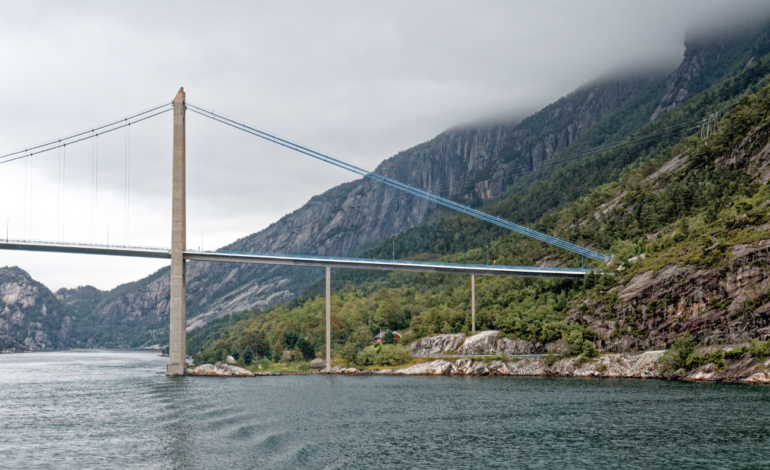
A custom climbing robot developed by Eddyfi Technologies was designed to inspect the Port Mann Bridge in British Columbia. Equipped with multiple cameras, its circular configuration allowed the system to travel around the bridge’s supporting cables and assist maintenance personnel with routine inspection.
DAMS
Remote Inspection Can Reduce the Need for Personnel Entry
The U.S. Army Corps of Engineers field-tested a robotic inspection platform known as Dambot. Using tools including high-resolution cameras and LiDAR, the system was designed to document outlet works and create detailed models that inspectors could evaluate remotely.
AEROSPACE & DEFENSE
Robotic Systems Can Prepare and Coat Complex Components
Aerobotix developed automated systems for work on complex aerospace and defense components. In an enclosed robotic spray environment, automated equipment can perform steps such as scanning, sanding, coating, and measurement where precise, repeatable application is especially important.
UNDERWATER INFRASTRUCTURE
Small Autonomous Vehicles Can Go Below the Surface
The National Oceanography Centre’s compact ecoSUB autonomous underwater vehicle was developed for ocean observation and monitoring applications. Technologies in this class can contribute to infrastructure monitoring by collecting information in underwater environments where conventional access may be difficult or expensive.
Inspection Robots Can Create More Than Pictures
One of the biggest advantages of robotic inspection is the ability to collect structured digital information rather than relying only on individual observations.
Depending on the platform, a robot may carry cameras, ultrasonic equipment, LiDAR, environmental sensors, or other inspection technologies. The resulting information can be tied to a specific location on an asset and retained for future comparison.
That repeatability can make it easier to evaluate how a condition changes from one inspection to the next.
FROM INSPECTION TO TRENDING
Collect Repeatable Data
↓
Map Findings to the Asset
↓
Compare Inspection Cycles
↓
Identify Change Over Time
Robotics and Digital Asset Management Can Work Together
Robotics becomes even more useful when the information collected does not remain isolated inside a single inspection report.
Digitalization can allow inspection data to become part of a larger asset record. Images, measurements, locations, previous findings, repair history, and other information can be combined to help corrosion professionals understand how an asset is changing.
Automation and machine learning can then assist with organizing or analyzing large amounts of data, while qualified professionals remain responsible for interpreting findings in the context of the asset, materials, environment, inspection method, and applicable requirements.
MORE DATA DOES NOT AUTOMATICALLY MEAN BETTER DECISIONS
Robotic systems can dramatically increase the amount of information collected during an inspection. The value comes from turning that information into reliable findings that support engineering, corrosion-control, maintenance, and asset-management decisions.
Will Robots Replace Corrosion Professionals?
As robotics becomes more capable, it naturally raises questions about how automation will affect the corrosion and protective coatings workforce.
The technologies described here still require people to select the right tool, plan the work, operate and maintain equipment, interpret inspection data, understand corrosion mechanisms, evaluate coating condition, troubleshoot unusual situations, and decide what action should follow.
What may change is the balance of skills required. Field experience increasingly intersects with robotics, software, sensors, data management, automation, and remote operations.
GAVIN GOODEN · BLASTONE INTERNATIONAL
“Robots don’t take away jobs, they make them more upskilled and better for the operators.”
The Corrosion Professional of the Future May Be Part Inspector, Part Technologist
Knowing how corrosion works remains essential. A robot can collect an image or measurement, but understanding what that observation means requires knowledge of materials, exposure environments, failure mechanisms, coatings, cathodic protection, inspection, and asset history.
At the same time, professionals who understand sensors, robotic platforms, data systems, programming, automation, and remote inspection may be able to use those tools to expand what one person or one team can accomplish.
That makes the intersection of practical field knowledge and technology particularly valuable.
A HIGH-VALUE SKILL COMBINATION
- Corrosion science and materials knowledge
- Protective coatings and surface preparation
- Inspection and nondestructive evaluation
- Field and jobsite experience
- Robotics and automation
- Sensors and instrumentation
- Data interpretation and visualization
- Software and digital asset systems
Robots Still Need Human Judgment
Robotic systems are tools—not substitutes for understanding the asset.
An inspection robot may identify an anomaly, but someone still has to determine whether the indication represents corrosion, coating deterioration, a structural concern, an artifact of the inspection method, or something else entirely.
Likewise, a robotic coating or surface-preparation system must still operate within the project specification and achieve the required surface condition, cleanliness, profile, film build, coverage, and quality.
THE HUMAN + MACHINE MODEL
Robots Provide Access, Repeatability & Data
+
People Provide Context, Expertise & Judgment
↓
Safer, More Informed Asset Protection
What This Technology Means for Materials Protection
Robotics expands the range of places corrosion professionals can inspect and the ways maintenance work can be performed.
That matters because corrosion is often most dangerous when deterioration develops somewhere difficult to see, inspect, or access.
A crawler on a bridge cable, a robot inside a dam outlet, an automated coating system in a spray booth, or an autonomous vehicle underwater all serve the same broader purpose: helping people understand and protect assets without requiring them to physically occupy every environment where that work needs to happen.
BOTTOM LINE
Robotics can help corrosion professionals reach hazardous and difficult-to-access areas, perform repeatable work, and collect more useful asset data. The greatest value comes not from replacing human expertise, but from combining better machines with the knowledge and judgment of skilled people.
TECHNOLOGY NOTE
The robotic systems and company examples described in this article reflect technologies documented in the original article. Robotics, autonomous inspection, sensors, software, machine learning, and industrial automation continue to evolve rapidly. Current capabilities, products, safety requirements, and applications should be evaluated using current technical information and project requirements.
Technologies Featured in the Original Article
- Apellix — aerial robotics
- BlastOne International — robotic abrasive blasting
- Eddyfi Technologies — robotic and advanced inspection technologies
- U.S. Army Corps of Engineers Dambot Project — remote dam inspection
- Aerobotix — robotic aerospace and defense manufacturing systems
- National Oceanography Centre — autonomous underwater technology
- Gecko Robotics — robotic inspection and asset data technologies
EXPLORE MORE
Technology Is Changing How We Find and Fight Corrosion
From robotic inspection and automated surface preparation to sensors and digital monitoring, new tools are expanding what materials-protection professionals can see, measure, and accomplish.

Have photos or videos from the field? Submit them to AMPP →