100 Years Maintenance-Free: Zinc is Key to Norwegian Bridge Protection
BRIDGES · THERMAL SPRAY ZINC · DUPLEX COATINGS · METALLIZING · LIFECYCLE PROTECTION
Norway’s bridges face salt, moisture, wind, cold temperatures, remote locations, and difficult access—yet many have required remarkably little coating maintenance over decades of service.
One reason is the country’s long-standing use of thermal spray zinc duplex coating systems on steel highway bridges. Since the 1960s, the Norwegian Public Roads Administration has relied on metallized zinc combined with paint topcoats to protect steel structures in some of Europe’s most demanding environments.
THE LIFECYCLE IDEA
Prepare the Steel Correctly
↓
Apply Thermal Spray Zinc
↓
Add a Paint Topcoat System
↓
Maintain the Topcoat Before the Zinc Is Lost
↓
Extend Steel Protection for Decades
Norway’s Bridges Create a Demanding Corrosion Environment
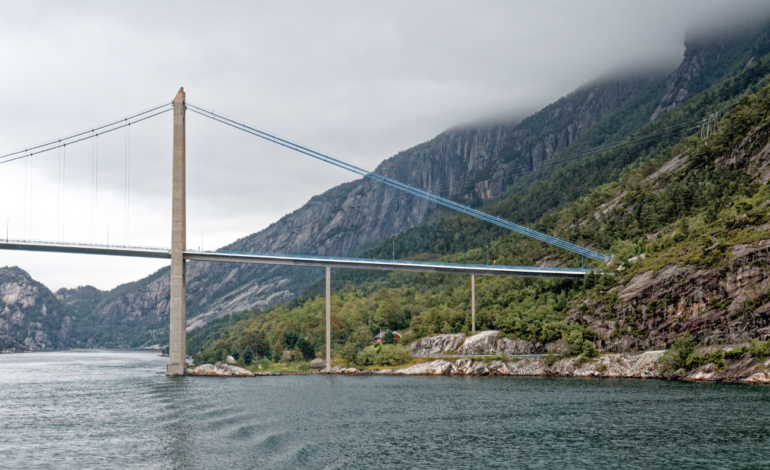
Norway’s road network includes thousands of bridges crossing fjords, waterways, valleys, and coastal regions.
Many of those structures are exposed to marine salts, persistent moisture, wind, temperature cycling, and remote access conditions that can make conventional bridge maintenance expensive and disruptive.
For an infrastructure owner, that makes coating durability especially valuable. The longer the protective system can remain effective between major interventions, the less often crews have to mobilize access equipment, containment, blasting equipment, and coating operations over roads or waterways.
LONG LIFE MEANS MORE THAN LESS PAINT
For bridges, every major coating intervention can involve traffic control, access systems, environmental containment, surface preparation, inspection, labor, and extended work windows. Longer coating life can therefore reduce far more than material consumption.
Norway Began Testing Thermal Spray Zinc in the 1950s
The Norwegian Public Roads Administration first tested thermal spray zinc on the Djupfjord Bridge, a small suspension bridge in the Lofoten archipelago, in 1958.
By 1965, the agency had adopted thermal spray zinc duplex systems for new steel highway bridges.
The approach proved well suited to the country’s demanding bridge environments, and decades of field performance provided the agency with a growing body of evidence about how the systems aged.
DECADES OF FIELD EXPERIENCE MATTER
A coating system does not prove itself in the specification—it proves itself on the asset.
Long-term inspection data can show how well a system tolerates environmental exposure, defects, maintenance cycles, and real-world application variability.
What Is Thermal Spray Zinc?
Thermal spray zinc is a metallic coating applied by melting zinc and propelling the molten or semi-molten particles onto a prepared steel surface.
The deposited particles build into a continuous metallic zinc layer that bonds mechanically to the roughened steel substrate.
The process is commonly referred to as metallizing or metallization.
THE BOND IS PRIMARILY MECHANICAL
Abrasive blasting is critical because the thermal spray layer depends on an appropriately clean, roughened steel surface to achieve the mechanical anchorage required for reliable performance.
Flame Spray vs. Arc Spray
Thermal spray zinc can be applied using different processes. Two common methods are flame spraying and electric arc spraying.
FLAME SPRAY
A fuel-and-oxygen flame melts zinc wire or powder fed into the flame. Compressed air then propels the molten particles toward the prepared steel surface.
ELECTRIC ARC SPRAY
Two zinc wires are continuously fed toward one another. An electric arc melts the wire tips, and a gas stream atomizes and propels the molten metal toward the substrate.
Why Zinc Protects Steel
Zinc provides steel with more than simple barrier protection.
Because zinc is more active than steel in the galvanic series, it can provide sacrificial protection to exposed steel at small defects where the metallic layer remains electrically connected to the substrate.
That electrochemical behavior is one of the reasons metallic zinc coatings can perform differently from barrier-only coating systems when scratches, holidays, or localized damage occur.
THE ZINC LAYER DOES TWO JOBS
Barrier Between Steel & Environment
+
Sacrificial Protection at Localized Exposure
What Makes a Duplex Coating Different?
A thermal spray zinc layer can be used by itself, but applying paint over the metallic zinc creates what is known as a duplex coating system.
The paint provides an additional barrier that slows environmental exposure of the zinc.
At the same time, the underlying metallic zinc can help protect steel at small coating defects and reduce the tendency for corrosion to creep beneath damaged paint.
The result can be a synergistic service life that is longer than would be expected from simply adding the independent life of the zinc coating and paint system.
WHY DUPLEX SYSTEMS LAST
Paint Shields the Zinc
+
Zinc Protects Steel at Defects
↓
Longer Combined Protection
Maintenance Can Focus on the Paint Before the Zinc Is Consumed
One of the most important lifecycle advantages described in the Norwegian experience is the ability to maintain the paint layer before significant deterioration reaches the thermal spray zinc.
The historical source reported that first maintenance could occur after decades of service and, in favorable cases, might involve renewal of the paint system rather than abrasive blasting back to bare steel.
If the topcoat is renewed while the zinc remains in suitable condition, the owner may preserve the metallized layer and avoid repeating the most intensive parts of the original coating operation.
MAINTENANCE TIMING CAN PROTECT THE ORIGINAL INVESTMENT
Waiting until the entire protective system has failed can turn a maintenance coating project into a much larger rehabilitation project. Timely topcoat renewal may help preserve the underlying metallized layer and reduce future surface-preparation demands.
Could a Bridge Reach a 100-Year Design Life Without Major Coating Rehabilitation?
The long-term performance documented by the Norwegian Public Roads Administration led researchers to suggest that some bridges protected with properly applied thermal spray zinc duplex systems could potentially reach their full design life with relatively limited coating intervention.
That does not mean a bridge requires no inspection or maintenance. Structural condition, coating defects, drainage, joints, fasteners, damage, local exposure, and many other bridge components still require ongoing evaluation.
What it demonstrates is that a well-designed and properly applied corrosion-protection system can significantly reduce one major source of lifecycle maintenance demand.
THE REAL PERFORMANCE METRIC
How much protection can the system provide over the full life of the asset?
Initial coating cost is only one part of lifecycle performance. Inspection frequency, maintenance intervals, surface-preparation requirements, access, containment, shutdowns, and eventual rehabilitation all matter.
Application Quality Determines Whether the System Reaches Its Potential
Long theoretical service life does not guarantee long field service life.
The historical research emphasized that coating quality was one of the most important factors affecting actual durability.
Defects such as pinholes, spitting, inadequate film build, poor surface preparation, or inconsistent thermal spray application can create localized weak points that reduce the performance of the overall system.
QUALITY-CONTROL AREAS
- Surface cleanliness
- Surface profile
- Thermal spray application consistency
- Metallic coating thickness
- Porosity and visible defects
- Seal or topcoat application where specified
- Paint film thickness
- Pinholes and holidays
- Edges, corners, welds, and difficult-access areas
- Environmental conditions during application
Inspection Is Essential for Thermal Spray Zinc
Thermal spray application requires close control because the finished metallic layer can vary based on surface preparation, spray distance, equipment settings, wire feed, operator technique, geometry, and access.
Inspection helps verify that the metallized layer and subsequent paint system meet the requirements intended to produce long-term performance.
This is especially important on bridge projects, where discovering widespread application deficiencies years later can result in expensive and difficult repairs.
DURABILITY STARTS DURING APPLICATION
Specification
↓
Surface Preparation
↓
Application
↓
Inspection & Verification
↓
Decades of Field Performance
Thermal Spray Zinc Has Tradeoffs
The durability benefits do not mean thermal spray zinc is the simplest option for every project.
Thermal spray work requires specialized equipment, trained operators, appropriately prepared surfaces, and careful control of application quality.
Mobilization and setup costs can also be higher than for some conventional coating systems, particularly on smaller projects.
The thermal spray process also introduces task-specific occupational hazards that must be evaluated and controlled through the applicable safety program, equipment requirements, ventilation, respiratory protection, PPE, and work procedures.
THE TRADEOFF
- Higher initial complexity can require specialized equipment and labor.
- Application quality matters greatly because defects can reduce expected service life.
- Inspection requirements are significant during preparation and application.
- Initial cost may be higher than some conventional alternatives.
- Lifecycle maintenance demand may be substantially lower when the system performs as intended.
The Bigger Lesson: Evaluate Coatings Over the Asset Life
Norway’s experience illustrates why protective coating decisions should not be based only on the lowest initial installed cost.
A system that requires less frequent major maintenance can reduce future blasting, containment, access, traffic disruption, labor, waste generation, and environmental exposure.
That can make a more complex initial coating system economically attractive over the full service life of a bridge.
THINK IN LIFECYCLE TERMS
Initial Protection + Quality Application + Inspection + Timely Topcoat Maintenance
↓
Lower Lifecycle Corrosion & Maintenance Burden
BOTTOM LINE
Norway’s decades of experience with thermal spray zinc duplex coatings show how a well-designed, properly applied corrosion-protection system can shift bridge maintenance from repeated major rehabilitation toward long-term preservation and strategic topcoat renewal.
HISTORICAL RESEARCH NOTE
This article summarizes historical bridge-performance research and thermal spray practices described in the cited sources. Coating systems, thermal spray equipment, inspection methods, standards, safety requirements, and bridge specifications may have changed. Current projects should follow the applicable project specification, current standards, manufacturer requirements, qualified inspection guidance, and site-specific safety procedures.
Sources & Additional Reading
- Materials Performance: Duplex Zinc Coatings for Steel Bridges — Martin Gagné and Ole Øystein Knudsen
- Materials Performance: Strategies to Inspect Thermal Spray Zinc Metalizing — Bernardo Duran
LEARN MORE
Explore Bridge Corrosion Protection
AMPP resources cover protective coatings, metallizing, surface preparation, inspection, corrosion control, and materials protection for bridges and other infrastructure.

Have photos or videos from the field? Submit them to AMPP →