Zebra Mussels Are the Pits — Literally
BIOFOULING · ZEBRA MUSSELS · GALVANIC CORROSION · COATINGS · WATER INFRASTRUCTURE
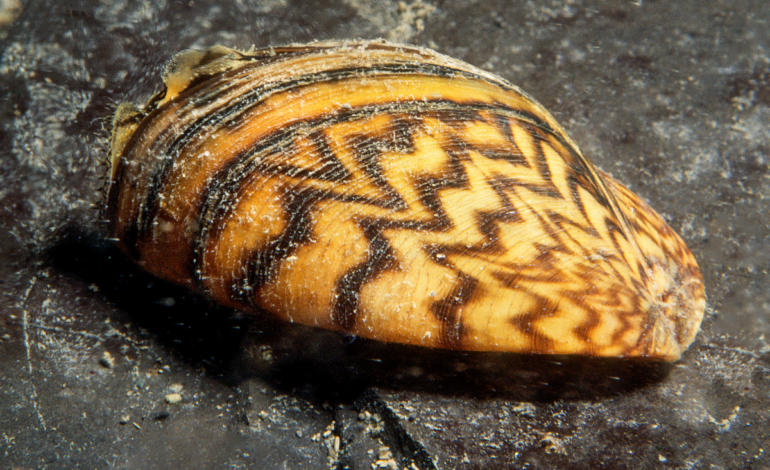
Zebra mussels may be small, but when they attach by the thousands to infrastructure, they can create much larger problems for water systems, navigation structures, power facilities, and other submerged assets.
At the Emsworth Locks and Dam on the Ohio River near Pittsburgh, Pennsylvania, invasive mussels were contributing to maintenance problems on aluminum-and-steel bulkheads. Restoring those structures required the coatings contractor to address biofouling, existing corrosion, dissimilar metals, surface preparation, containment, and a multi-coat protective system.
WHEN BIOFOULING BECOMES A MATERIALS-PROTECTION PROBLEM
Organisms Attach to the Surface
↓
Moisture, Deposits & Local Chemistry Change
↓
Operation & Maintenance Become More Difficult
↓
Corrosion Risk Can Increase
What Is Biofouling?
Biofouling is the accumulation of biological material on a surface. In water systems, that can include microorganisms, algae, plants, barnacles, mussels, and other organisms that attach to submerged structures.
Zebra mussels and quagga mussels are especially troublesome because they reproduce rapidly and can attach in dense colonies to pipes, gates, dam structures, vessels, intake systems, and other underwater infrastructure.
Once established, colonies can restrict flow, interfere with moving components, increase maintenance requirements, and alter the environment immediately adjacent to the underlying material.
BIOFOULING IS MORE THAN A CLEANING PROBLEM
Attached organisms can affect flow, access, inspection, coating condition, local water chemistry, oxygen concentration, deposits, moisture retention, and corrosion behavior. The exact effect depends on the material and service environment.
How Zebra Mussels Can Contribute to Corrosion
The relationship between biofouling and corrosion can be complex.
Dense mussel colonies can create deposits and shielded areas where conditions differ from the surrounding water. Their biological activity and waste products can also change the chemistry at the surface.
Historical research cited in the original article also linked zebra-mussel attachment and biological deposits with increased deterioration on submerged iron and steel surfaces.
For infrastructure owners, that means invasive mussels can become both an operational problem and part of a broader corrosion-management challenge.
BIOFOULING CAN CREATE LOCALIZED CONDITIONS
The water around an asset is not always the same as the environment beneath a biological deposit.
Deposits and organisms can influence oxygen availability, moisture retention, chemistry, and access to the underlying surface—all of which can affect localized corrosion behavior.
The Emsworth Locks and Dam Case
The Emsworth Locks and Dam is located on the Ohio River near Pittsburgh and is operated by the U.S. Army Corps of Engineers.
At the time of the original project, zebra mussels had become a maintenance concern on bulkhead structures associated with the facility’s gate system.
The structures presented an additional corrosion challenge because they incorporated both aluminum and steel.
TWO PROBLEMS WERE INTERACTING
Biofouling was increasing maintenance demands, while the combination of aluminum and steel created the potential for galvanic interaction where the metals were electrically connected in an electrolyte.
Why Dissimilar Metals Matter
When dissimilar metals are electrically connected while exposed to an electrolyte, a galvanic cell can form.
The more active metal may experience accelerated corrosion depending on factors such as the metals involved, their relative surface areas, electrical continuity, water chemistry, coating condition, and geometry.
In the Emsworth case, the contractor reported pitting damage in the aluminum and concern about the long-term condition of the bulkhead structures.
GALVANIC CORROSION REQUIRES A CIRCUIT
Dissimilar Metals
+
Electrical Connection
+
Electrolyte
↓
Potential Accelerated Attack of the More Active Metal
Preparing the Bulkheads for Coating
Coatings Unlimited, Inc., a St. Louis-based industrial coatings contractor, was brought in to restore the affected bulkheads.
The crew worked on one bulkhead at a time and installed containment before surface preparation.
The historical project used partial containment beneath the work area and fully enclosed tarps during preparation to help control debris and prevent material removed from the surface from being released back into the surrounding environment.
The aluminum was pressure washed to remove contaminants such as algae before abrasive blasting.
HISTORICAL SURFACE-PREPARATION SEQUENCE
- Containment around the work area
- Removal of mussels and biological contamination
- High-pressure water cleaning
- Abrasive blasting of the aluminum
- Surface profile prepared to the project requirement
- Inspection before coating application
The original project referenced SSPC-SP 16, Brush-Off Blast Cleaning of Non-Ferrous Metals. Current projects should always verify the applicable current standard, specification, coating manufacturer requirements, and required surface profile before work begins.
Repairing Existing Pits Before Applying the Coating System
Surface preparation revealed areas where corrosion had already created pits in the aluminum.
Before applying the main protective coating system, the crew used a ceramic epoxy-based composite material to fill and restore the damaged areas.
That repair step helped create a more uniform surface for the subsequent coating system.
COATINGS DO NOT ERASE EXISTING DAMAGE
Pitting, section loss, cracks, or other substrate defects should be evaluated and addressed as required before the protective system is applied. The coating protects the prepared substrate; it does not restore missing structural material by itself.
A Three-Coat System Protected the Aluminum
Following repairs, the crew applied a three-coat spray-applied protective system across the aluminum surfaces.
Between coats, the applicators sanded as needed, addressed defects, and verified coating thickness before continuing.
In total, approximately 40,000 square feet of aluminum was coated during the project.
THE RESTORATION SEQUENCE
Remove Biofouling & Contaminants
↓
Prepare the Aluminum Surface
↓
Repair Pitted Areas
↓
Apply Protective Coating System
↓
Inspect Between Coats & Verify Thickness
Why Surface Preparation Matters So Much on Aluminum
Aluminum naturally develops an oxide layer, which is one reason uncoated aluminum can perform well in many environments.
But when a protective coating is specified, the surface must be prepared to create suitable cleanliness and adhesion conditions for the selected coating system.
Biological contamination adds another complication because organisms, slime, salts, organic material, and other deposits must be removed before the coating can properly bond to the substrate.
ADHESION STARTS WITH THE SUBSTRATE
A coating system can only perform as intended when the surface beneath it has been prepared to the required condition. Residual biological contamination, oils, salts, corrosion products, or an unsuitable surface profile can undermine adhesion and long-term performance.
Can Coatings Prevent Future Biofouling?
The Emsworth project focused on restoring infrastructure already affected by fouling and corrosion, but another part of the challenge is preventing organisms from attaching in the first place.
Historically, many antifouling coatings have relied on biocides that discourage or kill organisms at the coated surface. Researchers and coating manufacturers have also explored approaches intended to reduce fouling without relying on traditional biocide release.
Several technologies discussed in the historical source were originally developed for marine vessels, but the broader concepts illustrate how antifouling research continues to look beyond conventional coating chemistry.
HISTORICAL ANTIFOULING RESEARCH APPROACHES
- Adhesion-interference coatings designed to make it more difficult for organisms to establish a durable bond with the surface
- Alternative antifouling chemistries intended to reduce reliance on traditional copper-based biocides
- Nanoparticle-based approaches investigated for their ability to interfere with fouling processes
- UV-based technologies designed to inhibit attachment using light rather than a conventional biocide-releasing coating
These examples represent historical research and development, not universal recommendations for freshwater infrastructure. Any antifouling strategy should be evaluated for the actual service environment, substrate, regulatory requirements, ecological impacts, coating compatibility, and expected maintenance cycle.
The Bigger Lesson: Biological and Corrosion Problems Can Overlap
Biofouling is sometimes treated as a separate maintenance category from corrosion, but underwater infrastructure often does not divide problems so neatly.
Biological deposits may change the immediate environment. Dissimilar metals may create galvanic concerns. Coating defects may expose the substrate. Difficult access can delay inspection and cleaning. Aggressive water chemistry may accelerate deterioration.
Effective asset management therefore requires looking at the entire exposure system rather than treating each symptom independently.
THINK IN SYSTEMS
Water Chemistry + Biological Fouling + Materials + Coatings + Geometry + Maintenance
↓
Better Control of Biofouling & Corrosion Risk
BOTTOM LINE
Zebra mussels can turn biofouling into a broader infrastructure problem by interfering with operation, making maintenance more difficult, and creating localized environments that may contribute to corrosion. Protecting underwater assets requires addressing the organisms, the materials, the corrosion mechanism, and the coating system together.
HISTORICAL PROJECT NOTE
This article describes a historical U.S. Army Corps of Engineers coatings project and antifouling research published in earlier years. Coating products, standards, antifouling technologies, environmental requirements, containment practices, and surface-preparation requirements may have changed. Current work should follow the current project specification, applicable standards, manufacturer instructions, environmental requirements, and qualified technical guidance.
Sources & Additional Reading
- AMPP Technical Exchange on Ship Biofouling
- CoatingsPro: Coatings Crew Mussels Through Corroded Bulkheads
- National Park Service: Invasive Zebra Mussels
- U.S. Army Corps of Engineers: Emsworth Locks and Dams
- U.S. Army Corps of Engineers: Zebra Mussel Resource Document
- U.S. Department of the Interior: Invasive Species Impacts on Infrastructure
- Zebra Mussels, Shipwrecks, and the Environment
LEARN MORE
Explore Biofouling & Corrosion Control
AMPP resources cover corrosion mechanisms, coatings, galvanic corrosion, water infrastructure, surface preparation, and materials protection.

Have photos or videos from the field? Submit them to AMPP →