Fun Ride: Coating an Amusement Park
AMUSEMENT PARKS · PROTECTIVE COATINGS · MAINTENANCE PAINTING · MULTIPLE SUBSTRATES
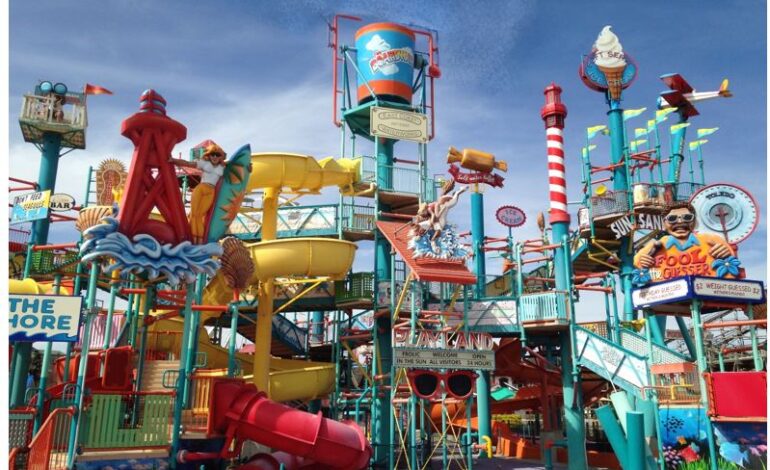
Amusement parks may look like one facility, but from a coatings perspective they can behave more like dozens of small industrial projects packed into the same property.
A PennCoat, Inc. crew discovered exactly that when it took on maintenance-coating work at a large U.S. amusement park. Over five weeks, the team moved between rides and structures with different substrates, access requirements, colors, coating systems, and maintenance priorities.
WHY AMUSEMENT-PARK COATING WORK GETS COMPLICATED
Many Structures
+
Many Substrates
+
Many Coating Systems & Colors
+
Different Access Conditions
↓
One Maintenance Plan Has to Coordinate Them All
The Project Started With a Cold Call
PennCoat Project Manager Jeff Neal was looking for new coatings clients when he contacted one of the largest amusement parks in the United States.
The park chose to remain unnamed in the original case study, but Neal was already familiar with the facility as a visitor.
When the project began in March 2015, Neal and a four-person crew quickly realized that coating work inside a sprawling attraction would present some unusual logistical problems.
The First Surprise: Travel Time Became Part of the Job
The amusement park covered more than 100 acres, and the crew was working on structures located throughout the property.
That created an estimating issue the team had not fully anticipated: simply moving people, tools, equipment, and coating materials from one ride to another consumed meaningful time.
According to Neal, moving between work areas on foot could take approximately 20 minutes. Using company vans inside the park reduced some of those trips to roughly five minutes.
That seemingly small operational adjustment helped recover time that otherwise would have been lost from the project budget.
LOGISTICS CAN BE A REAL COATING COST
On a large property, mobilization does not happen only at the beginning and end of the job. Every move between work areas can affect labor hours, material handling, equipment access, and productivity.
Different Rides Meant Different Coating Problems
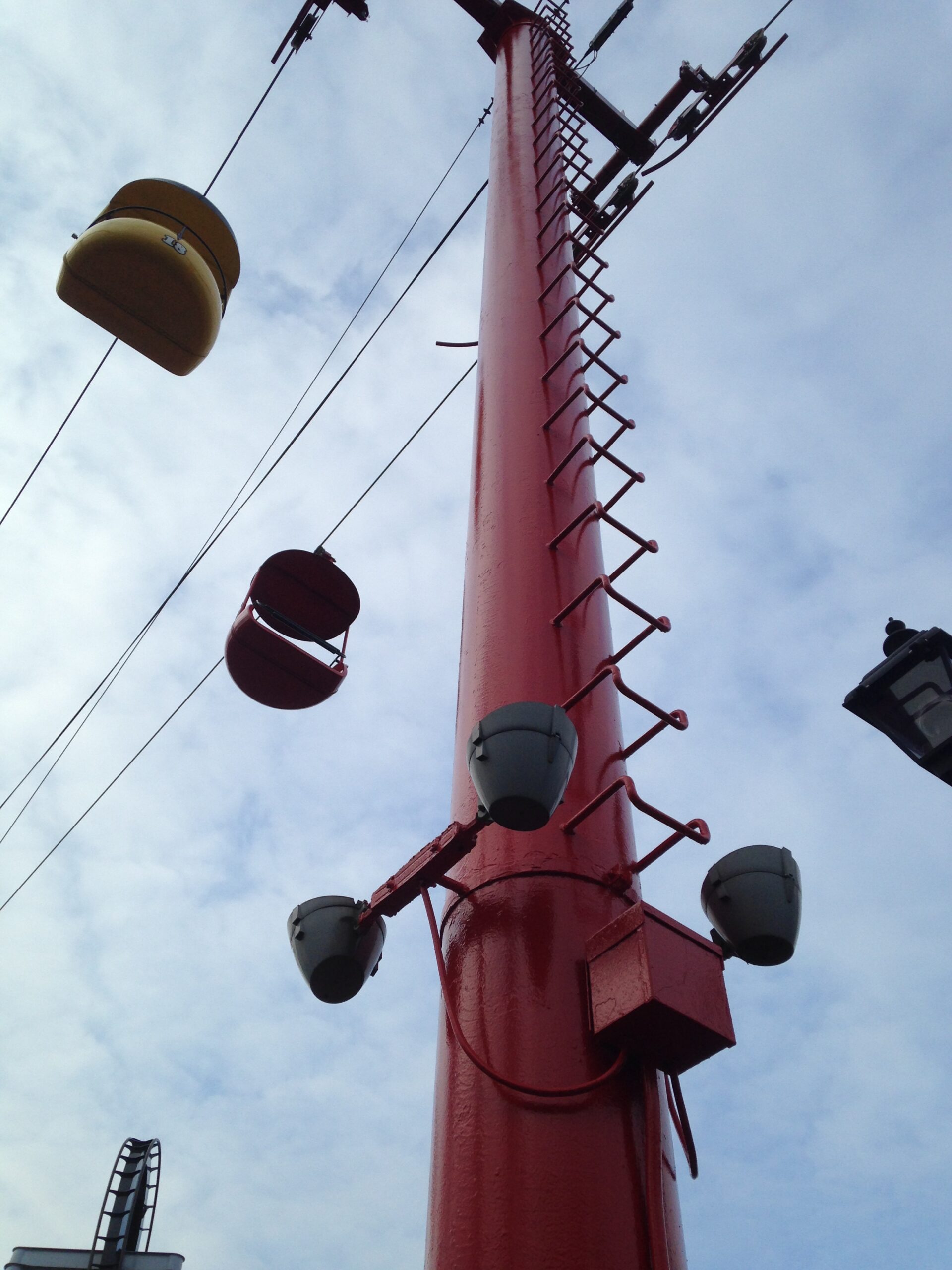
Amusement-park maintenance can involve many different structures, substrates, colors, and access conditions within the same property.
The crew was not applying one coating system repeatedly across identical equipment.
Instead, each section of the park introduced a new combination of substrate, preparation method, application technique, access requirement, color, and desired finish.
ONE PARK, MANY COATING SYSTEMS
Wood Siding & Trim
+
Steel Rails & Structural Elements
+
Fiberglass
+
Water-Exposed Surfaces
↓
Different Preparation + Different Application
Case 1: A Roller-Coaster Waiting Deck
One assignment involved the waiting deck for a roller coaster—the covered structure beneath which guests waited in line.
The area included approximately 1,500 square feet of T1-11 wood siding and wood trim.
Because the substrate was wood, the crew used comparatively gentle pressure washing so it could clean the surface without damaging or splintering the siding.
Absorption Made the Finish Harder to Predict
The siding was coated with two rolled coats of a light-gray architectural coating, with the historical project reporting an average total thickness of approximately 8 mils.
The porous wood absorbed coating unevenly, which meant the applicators had to work the material into the surface to achieve a visually consistent finish.
The crew ultimately used more coating than anticipated because additional material was needed to overcome variation in absorption and avoid an uneven appearance.
POROUS SUBSTRATES CAN CHANGE MATERIAL CONSUMPTION
Coverage rates on paper do not always predict actual field consumption. Surface porosity, texture, profile, application method, waste, geometry, and the desired appearance can all affect how much material the job ultimately requires.
Detailed Trim Took More Time Than Broad Surfaces
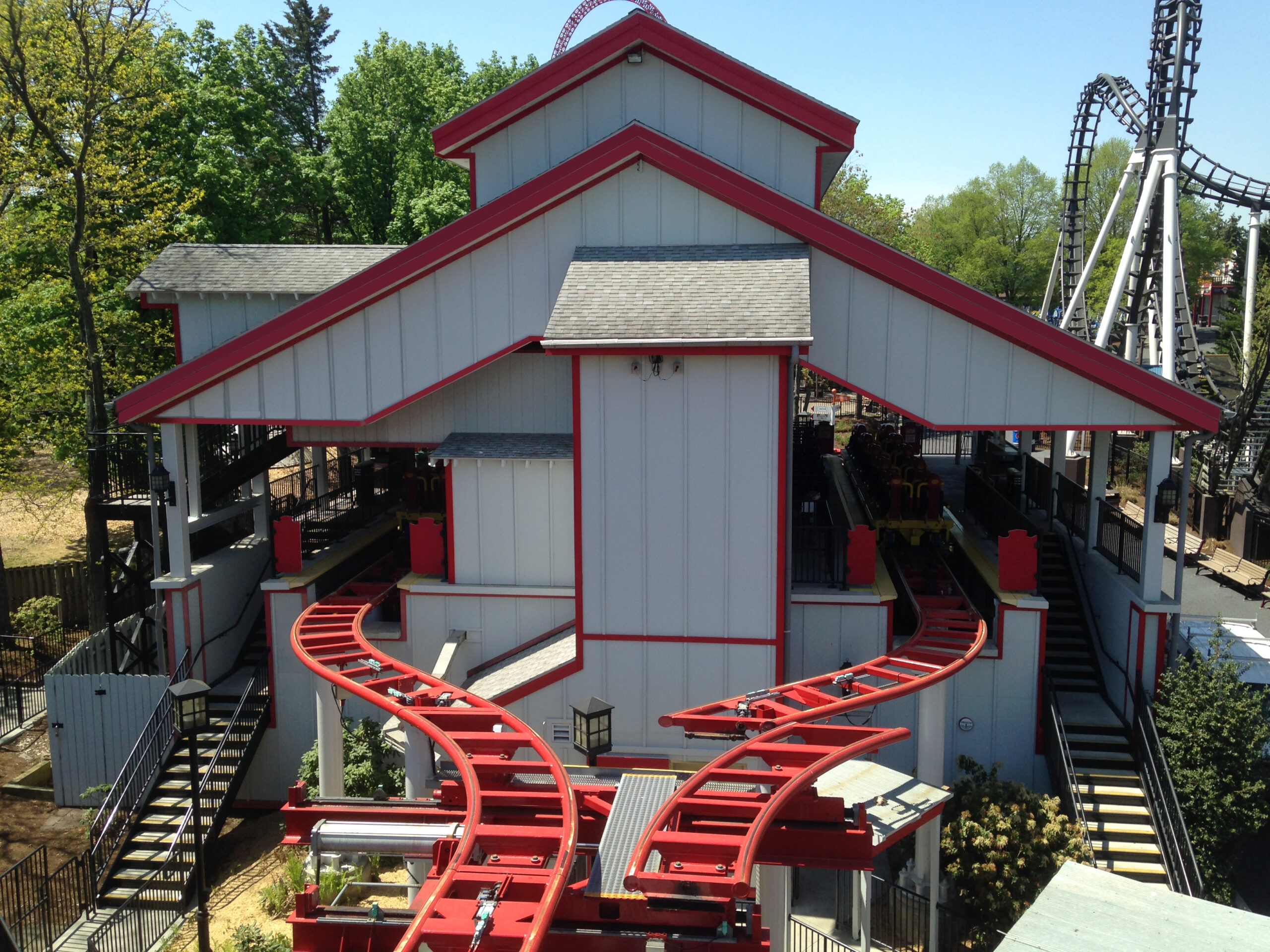
Detailed trim required slower brush work and careful cutting-in against the surrounding siding.
The crew also coated approximately 700 feet of trim in a contrasting safety-red color.
Unlike the broad siding surfaces, the trim required brush application and careful cutting-in to avoid getting the red coating onto the surrounding gray siding.
The original case study describes this as more time-consuming “finesse” work—an important reminder that square footage alone does not determine labor.
LABOR DOES NOT SCALE ONLY WITH AREA
Large Flat Surface
≠
Same Labor as Detailed Edges, Trim & Color Transitions
The complete roller-coaster deck assignment reportedly took about nine hours. Because the structure reached approximately 30 feet high, the crew used a boom lift for elevated access.
Case 2: Metal Rails on a Hillside
The next assignment involved approximately 110 feet of railroad track area with metal safety rails and handrails.
The location itself complicated the work because part of the rail system was positioned along the side of a hill.
The historical project describes the crew using harnesses and tie-off while working in the area.
Surface preparation involved pressure washing followed by hand-tool or power-tool cleaning in areas showing heavier rust.
HISTORICAL METAL-RAIL COATING SYSTEM
- Pressure washing
- Localized rust removal using hand or power tools
- One primer coat
- Two finish coats
- Approximately 8 mils reported total coating thickness
The original project used Carboline coating products for the rail system. Those product references are historical; current maintenance work should follow the current specification and manufacturer requirements for the actual substrate and service environment.
Case 3: A Waterpark Structure With Almost Everything
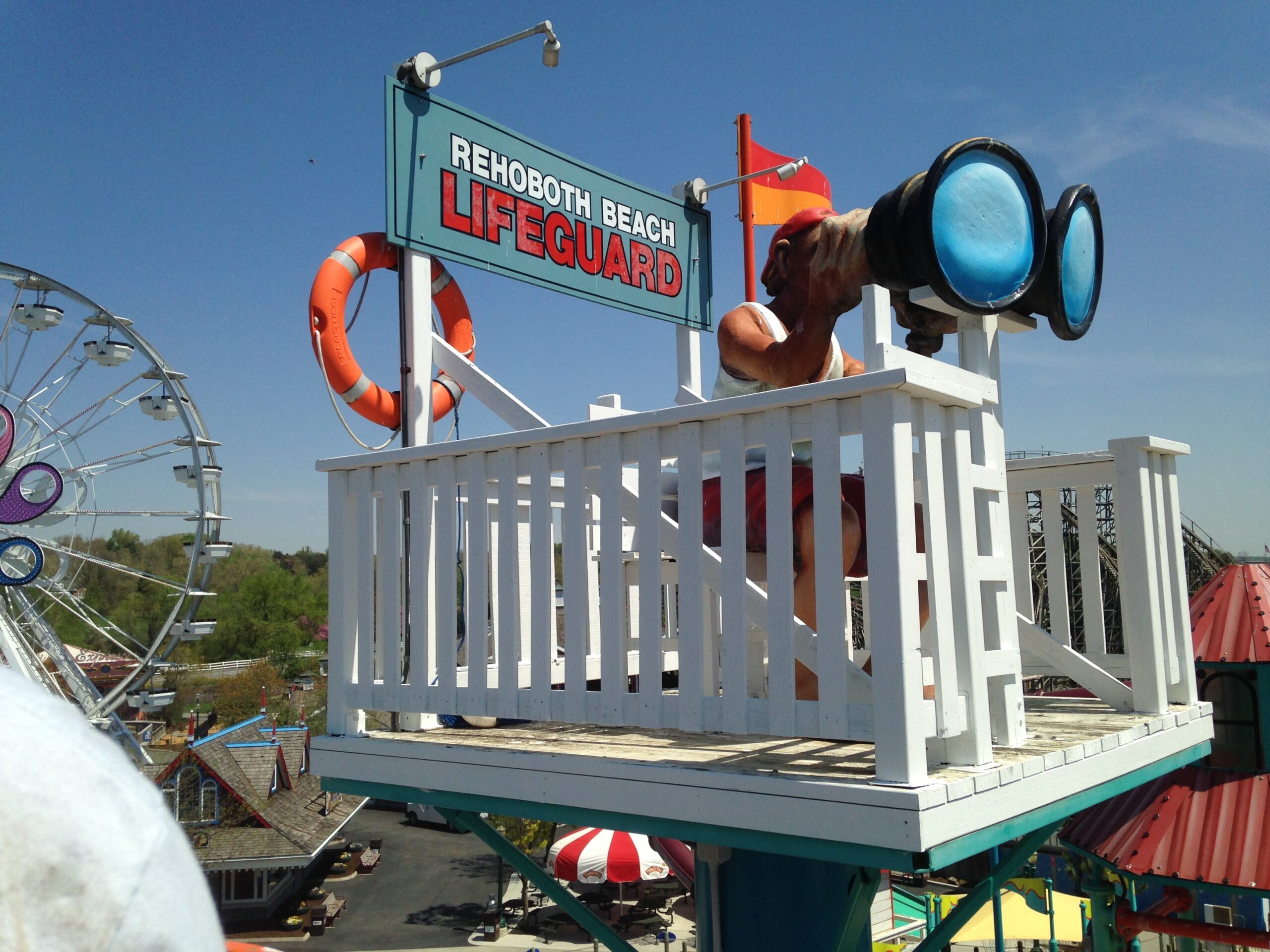
Water attractions can combine continuous moisture exposure with many colors, substrates, details, and maintenance priorities.
The crew’s most complicated assignment was a large waterpark funhouse.
The structure combined fiberglass, wood, and steel, along with numerous colors and product types. The amount of water moving through the attraction also contributed to repeated coating deterioration.
That combination made it difficult to estimate the entire scope precisely before work began.
WHY THE WATERPARK SCOPE WAS HARD TO ESTIMATE
Fiberglass + Wood + Steel
+
Dozens of Colors & Products
+
Constant Water Exposure
+
Uncertain Maintenance Priorities
↓
Scope Had to Be Prioritized in the Field
Owner and Contractor Had to Define What Mattered Most
Because the waterpark structure was so complex, the contractor worked closely with the park’s maintenance manager to determine which areas should receive attention.
The owner supplied the coating materials for this part of the project, and the historical article describes roughly 50 different colors and products being involved.
After walking the structure together, the team excluded the fiberglass from the immediate scope and focused on areas such as wood paneling and corrugated steel decking that showed a greater maintenance need.
The steel decking was prepared with hand tools and coated using the products and colors specified for that historical project.
WHEN EVERYTHING CANNOT BE DONE AT ONCE, PRIORITIZATION MATTERS
A maintenance survey can help owners distinguish between cosmetic deterioration, active corrosion, coating failure, moisture-related damage, access constraints, and areas that present a higher operational or safety priority.
Water Exposure Can Turn Coating Maintenance Into a Recurring Challenge
The waterpark’s maintenance manager described the funhouse as especially difficult to maintain because of the amount of water moving through the structure and the resulting peeling paint.
For wet amusement attractions, coating performance can be influenced by much more than color retention or appearance.
Substrate type, water chemistry, drainage, immersion or splash exposure, UV exposure, abrasion, movement, surface preparation, adhesion, drying opportunities, and maintenance history can all affect the service life of a coating.
WET-ATTRACTION COATING QUESTIONS
- What substrate is actually being coated?
- Is the exposure immersion, splash, condensation, or intermittent wetting?
- Does the surface dry between wetting cycles?
- Is there existing corrosion or coating delamination?
- How much abrasion or guest contact occurs?
- Are multiple materials joined in the same assembly?
- What preparation can realistically be performed?
- How much downtime is available for cure?
- Is the failure cosmetic, protective, or both?
Five Weeks Later, the Crew Had Learned the Park
The project lasted approximately five weeks.
Despite the logistical and technical complications, Neal described the experience positively and noted that working behind the scenes at an amusement park was memorable for the crew.
The contractor’s relationship with the park also continued, with PennCoat reportedly pricing additional work for the following year.
The Bigger Lesson: Amusement Parks Need Asset-by-Asset Coating Strategies
The most useful lesson from the project is that “painting the amusement park” is not really one coating job.
A single property may include structural steel, galvanized components, wood, concrete, fiberglass, decorative elements, water-exposed equipment, high-touch railings, elevated structures, ride supports, queue systems, and architectural surfaces.
Each one may require a different maintenance approach.
THINK ASSET BY ASSET
Identify the Substrate
↓
Understand the Exposure
↓
Assess Existing Condition
↓
Choose Preparation & Coating
↓
Plan Access, Downtime & Logistics
↓
Build the Maintenance Cycle
BOTTOM LINE
An amusement park is not one coating environment. Effective maintenance depends on understanding each asset’s substrate, exposure, access, condition, appearance requirements, and operational constraints—and then choosing the preparation and coating system accordingly.
HISTORICAL PROJECT NOTE
This case study describes amusement-park coating work performed in 2015. Product names, coating recommendations, access practices, fall-protection requirements, preparation methods, and manufacturer guidance may have changed. Current maintenance work should follow current asset conditions, project specifications, manufacturer requirements, applicable standards, qualified inspection guidance, and site-specific safety procedures.
SOURCE
This article was originally published by CoatingsPro Magazine and is republished with permission.
The original case study followed PennCoat, Inc. Project Manager Jeff Neal and his crew during maintenance-coating work at a large U.S. amusement park.
AMUSEMENT-PARK CORROSION RESOURCES
Protect Rides, Structures & Guest Areas
AMPP resources cover protective coatings, corrosion control, maintenance planning, inspection, surface preparation, and materials protection across complex facilities and infrastructure.

Have photos or videos from the field? Submit them to AMPP →