Blast Off: New Coatings at Power Plant Turbine
POWER GENERATION · PROTECTIVE COATINGS · CONFINED SPACE · SURFACE PREPARATION
Coating work inside turbine intake structures can look straightforward on paper. In practice, access, confined-space controls, surface preparation, environmental conditions, coating application, inspection, and plant safety all have to align.
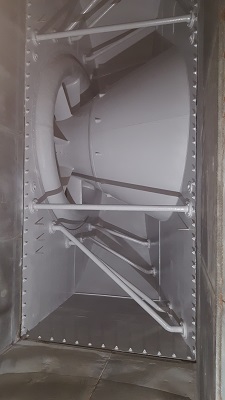
That was the challenge facing a five-person Industrial Repair Technology crew during a coating project at Dogwood Energy in Pleasant Hill, Missouri. The work involved two inlet ducts and bell mouths serving a gas-fired turbine intake system, with each inlet covering approximately 1,000 square feet.
THE PROJECT FLOW
Access the Confined Space
↓
Prepare the Galvanized Steel
↓
Apply High-Temperature Epoxy
↓
Verify Film Thickness & Integrity
↓
Return the Asset to Service
Two Turbine Intake Areas, Two Weeks Each
The project covered two inlet ducts and bell mouths associated with a turbine intake system. Each inlet represented approximately 1,000 square feet of surface area.
The crew reportedly spent about one week preparing each turbine area and another week applying the coating system.
The schedule sounds simple, but the work involved confined-space entry, hot-work planning, abrasive blasting, fall protection, environmental control, coating application, and inspection inside operating power-generation infrastructure.
THE COATING WORK WAS ONLY ONE PART OF THE JOB
Access, plant safety, confined-space procedures, substrate preparation, application conditions, inspection, and cleanup were all part of the coating system’s successful execution.
Confined-Space Controls Came First
The turbine intake areas were treated as confined spaces, which meant the crew had to address access and rescue requirements before surface preparation could begin.
The historical project required crew training, retrieval harnesses, atmospheric monitoring, and compliance with the plant’s permit-required confined-space procedures.
Hot-work permits were also required if the planned work could generate sparks.
CONFINED SPACE CHANGES THE ENTIRE WORK PLAN
Atmospheric Monitoring
+
Entry & Retrieval Planning
+
Ventilation & Work Controls
+
Hot-Work Planning Where Applicable
↓
Safe Access for Coating Work
The Turbines Were Locked Out and Deenergized
Although the equipment normally operated at elevated temperatures, the turbines were shut down during the project.
The original article states that they were locked out, tagged out, and completely deenergized while the crew was working in the area.
DEENERGIZATION IS PART OF ACCESS CONTROL
Inside powered mechanical systems, hazardous-energy control is inseparable from the coating plan. Work should not begin until the required isolation, verification, and site-specific lockout/tagout procedures are complete.
Preparing the Galvanized Steel
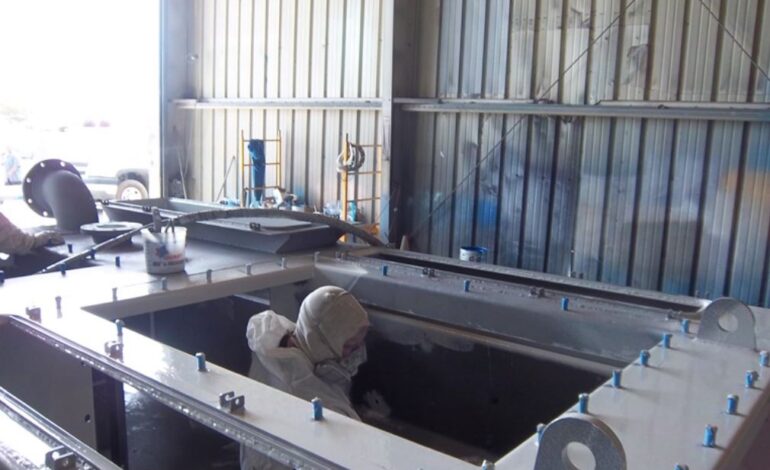
Surface preparation was performed inside the turbine intake structure before the protective epoxy coating was applied.
The substrate was galvanized steel, so the preparation phase had to create the cleanliness and surface profile required for the specified coating system.
The crew protected adjacent surfaces with heavy plastic before abrasive blasting. The historical project used blast pots and coal-slag abrasive to create an average profile of approximately 3 mils (76 μm).
The source describes the preparation as meeting what was then designated NACE No. 1/SSPC-SP 5, White Metal Blast Cleaning.
SURFACE PREPARATION SETS UP THE COATING
Cleanliness
+
Required Surface Profile
+
Dust & Debris Removal
↓
A Suitable Surface for Coating Application
Fall Protection and Daily Hazard Review
The work also involved elevated access inside the turbine structures.
The historical project describes fall-protection requirements for work performed from scaffolding and notes that the crew held daily safety meetings and maintained job-hazard-analysis documentation.
Those practices reinforced the reality that the coating operation was taking place inside a complex industrial work environment, not an isolated paint booth.
Applying the Epoxy in Two Layers
Once surface preparation and cleaning were complete, the crew moved to application of the protective epoxy system.
The historical case study identifies Belzona 5892 as the selected material. The crew used brushes and a Titan 440 airless sprayer to apply two layers at approximately 10 mils (254 μm) each.
The resulting average total dry film thickness was reported at approximately 20 mils (508 μm).
APPLICATION DETAILS REPORTED IN THE CASE STUDY
- Two-part epoxy coating
- Brush and airless-spray application
- Wet film thickness gages used during application
- Approximately 10 mils per layer
- Approximately 20 mils total dry film thickness
- High-temperature service capability
Why Temperature Capability Mattered
The turbine inlet areas were used in wet-compression and fogging service, and the surrounding equipment operated at elevated temperatures.
The source reports that the selected epoxy was rated for temperatures up to approximately 203°F (95°C), which made its high-temperature resistance one of the reasons it was selected for the project.
As with any historical product reference, current project design should rely on the current product data sheet and the actual service environment rather than assuming that the original performance limits remain unchanged.
Inspection Continued After Application
Application was not considered complete simply because the coating looked finished.
Wet film thickness was checked during application, and after cure the crew performed additional testing that included a sponge test and pull-off measurements.
The source notes that the work was documented through a NACE Level 3 inspection report.
APPLICATION + VERIFICATION
Apply the Coating
↓
Track Wet Film Thickness
↓
Allow the System to Cure
↓
Perform Integrity & Adhesion Testing
↓
Document the Completed Work
Cold Weather Changed Material Handling
COOLER FALL CONDITIONS
The work took place during September and October in the Midwest, so cooler temperatures became another project consideration.
The crew kept the coating materials in a controlled environment at the designated staging area so material condition could be managed before application.
MATERIAL STORAGE CAN AFFECT APPLICATION
Coating temperature can influence viscosity, mixing, atomization, film build, cure, and application behavior. Materials should be conditioned and stored according to current product requirements.
Cleanup Was Part of Completion
After coating and inspection were complete, the crew still had to remove residual abrasive and leave the work area ready for turnover.
The source describes use of HEPA-filtered vacuum equipment to finish removing spent abrasive from the project area.
The Reported Result: Repeat Work and Cost Savings
According to Industrial Repair Technology General Manager Jason Kraft, the completed project led to additional applications at the same power plant.
The source also reports estimated savings of approximately $60,000 compared with other products and service approaches considered for the work.
VALUE IS MORE THAN MATERIAL PRICE
A coating solution can create value through service life, outage duration, access requirements, labor, inspection, repeat maintenance, and avoided replacement—not only through the purchase price of the coating itself.
The Bigger Lesson: Power-Plant Coating Work Is a Coordinated System
The project was not simply a matter of spraying epoxy onto galvanized steel.
The crew had to coordinate confined-space entry, hazardous-energy control, hot-work planning, abrasive blasting, fall protection, substrate cleaning, material conditioning, application, film-thickness control, post-cure testing, housekeeping, and final turnover.
The coating’s performance depended on the quality of that entire process.
THINK IN PROJECT-LIFECYCLE TERMS
Isolate & Access the Equipment
↓
Prepare the Substrate
↓
Condition & Apply the Coating
↓
Inspect & Test the Finished System
↓
Clean Up & Return the Asset to Service
BOTTOM LINE
Successful coating work inside power-generation equipment depends on more than the coating material. Safe isolation, confined-space planning, surface preparation, application control, inspection, and turnover all work together to determine the quality of the finished system.
HISTORICAL PROJECT NOTE
This case study describes a historical coating project. Product names, coating limits, PPE, confined-space procedures, surface-preparation designations, inspection practices, certification references, and safety requirements may have changed. Current work should follow current site procedures, applicable regulations, project specifications, product data sheets, and qualified inspection requirements.
SOURCE
This article by Stephanie Marie Chizik was originally published by CoatingsPro Magazine. Photos courtesy of Belzona. Republished with permission.
The original case study featured Industrial Repair Technology and coating work performed at Dogwood Energy in Pleasant Hill, Missouri.
COATINGS & POWER-GENERATION RESOURCES
Explore Protective Coatings, Surface Preparation & Inspection
AMPP resources cover protective coatings, industrial surface preparation, inspection, corrosion control, power-generation assets, and coating-application practices.

Have photos or videos from the field? Submit them to AMPP →