Out in the Oil Field: Tank Coating
STORAGE TANKS · PROTECTIVE COATINGS · SURFACE PREPARATION · OIL & GAS
A successful tank-lining project depends on more than choosing the right coating. Access, surface preparation, steel condition, temperature, humidity, safety, application equipment, and return-to-service requirements all have to work together.
That combination of challenges came together when NTS, Inc. coated the interior of a large heavy-crude storage tank at the Elk Hills oil field in California. The project involved a tight schedule, winter weather, high-temperature service, extensive surface preparation, and the added safety demands of working inside an operating oil field.
THE PROJECT AT A GLANCE
40,000-Barrel Crude Oil Tank
↓
Remove Existing Epoxy Lining
↓
Repair & Prepare the Carbon Steel
↓
Control Temperature & Humidity
↓
Apply High-Temperature Tank Lining
A 40,000-Barrel Heavy Crude Storage Tank
The tank was located at the Elk Hills oil field in California’s southern San Joaquin Valley. According to the original case study, NTS regularly performed work at the site.
This particular tank stored heavy crude oil and had a reported capacity of approximately 40,000 barrels. It measured roughly 100 feet in diameter and 32 feet high.
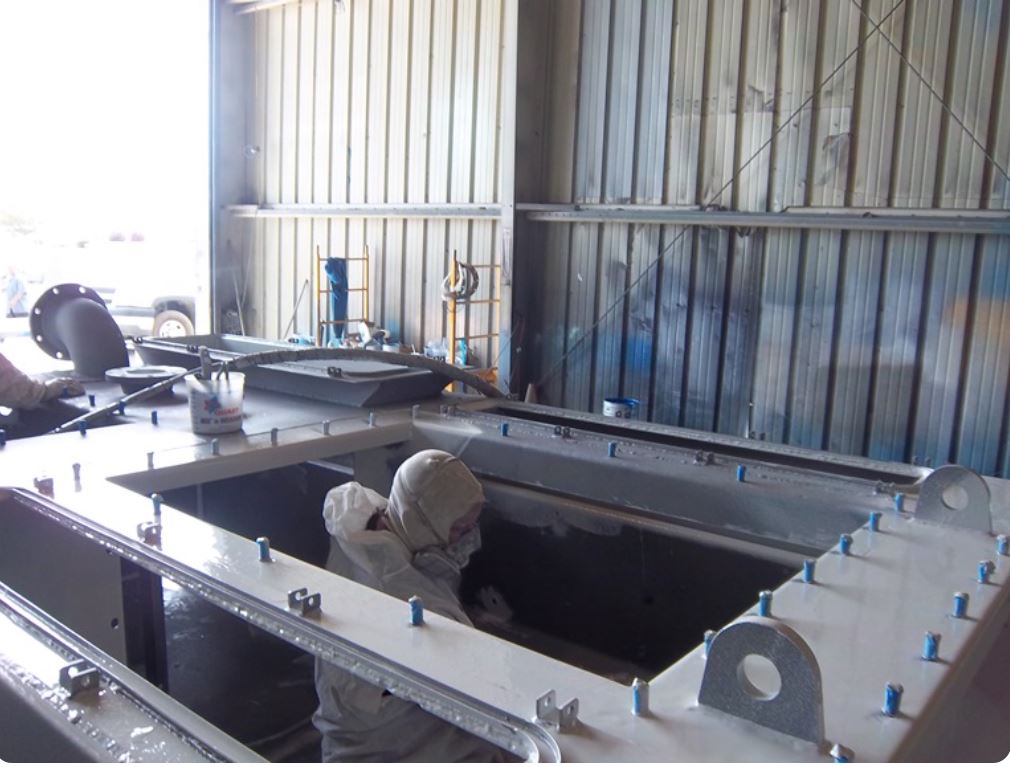
An eight-person NTS coatings crew was responsible for abrasive blasting and coating application inside the tank.
THE SERVICE ENVIRONMENT DROVE THE COATING REQUIREMENTS
The lining had to withstand continuous contact with hot crude oil while also accommodating the chemical and abrasive conditions associated with upstream production service.
Creating Better Access to the Tank Interior
The tank originally had two 36-inch manholes for access. To make movement of personnel, equipment, abrasive, and materials more practical, a larger door sheet was temporarily cut from the tank shell.
After the project was complete, the door sheet was welded back into place and the affected steel was coated as part of the lining system.
Removing the Existing Epoxy Lining
Before the new lining could be installed, the crew had to remove the existing epoxy coating and prepare the carbon steel substrate.
The project used abrasive blasting supported by an eight-ton blast pot, dust collection, dehumidification, and compressed-air drying equipment.
According to the case study, the interior was abrasive blasted twice to what was then designated NACE No. 1/SSPC-SP 5, White Metal Blast Cleaning. A chloride wash was performed between the blasting operations to help remove soluble salts.
SURFACE PREPARATION SEQUENCE
Remove Existing Lining
↓
Abrasive Blast
↓
Remove Soluble Salts
↓
Blast Again to Final Cleanliness
↓
Inspect & Repair Steel
Surface Preparation Revealed Steel That Needed Repair
Coating replacement projects often uncover substrate conditions that were not fully visible before the existing lining was removed.
During this project, welding repairs were made where necessary on the tank shell and roof. In areas where deterioration was severe, steel plate sections were replaced.
Those repairs had to be completed before the lining system could be applied over a sound, properly prepared substrate.
THE COATING CANNOT REPAIR UNSOUND STEEL
Surface preparation is also an inspection opportunity. Severe section loss, damaged welds, sharp edges, defects, or other substrate conditions should be addressed before the coating system is expected to perform.
Winter Weather Complicated the Application
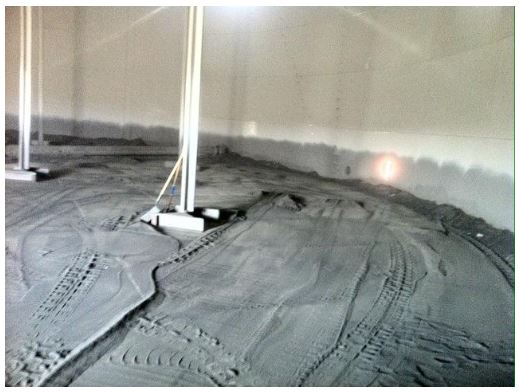
Environmental control was necessary to keep the interior within acceptable coating-application conditions during winter weather.
The project took place during winter, when temperatures in California’s San Joaquin Valley could fall below the coating system’s minimum application temperature.
The source reports that the coating used on the project required application temperatures of at least 50°F (10°C), and humidity also needed to remain controlled.
The crew therefore used heaters and dehumidifiers to maintain suitable ambient conditions inside the tank.
THE WEATHER OUTSIDE DOESN’T CONTROL THE SPECIFICATION
The coating still needs the environment it was designed to be applied in.
Heating, dehumidification, ventilation, dew-point control, substrate temperature, and environmental monitoring can become essential project controls when natural conditions fall outside the coating manufacturer’s requirements.
The Finished Lining Had to Survive Much More Heat
Ironically, while the crew had to heat the tank to apply the coating in winter, the lining itself had to tolerate much higher service temperatures once the tank returned to operation.
The heavy crude oil was reportedly stored at approximately 225–250°F (107–121°C) to help maintain movement and handling characteristics.
The historical project selected Sherwin-Williams Nova-Plate 325, described in the original case study as a ceramic- and glass-flake-filled novolac epoxy suitable for high-temperature immersion service.
SERVICE TEMPERATURE AND APPLICATION TEMPERATURE ARE DIFFERENT REQUIREMENTS
A coating may be designed to tolerate very high temperatures after cure while still requiring a much narrower temperature and humidity window during application and curing.
Why a Novolac Epoxy Was Selected
Novolac epoxies are highly cross-linked coating materials commonly used where elevated temperature and chemical resistance are important.
In the original project, the selected lining was intended to resist the combination of hot crude service, process chemicals, produced-water exposure, and abrasion associated with upstream production.
The specific coating system also offered scheduling advantages that supported the project’s tight turnaround.
PROJECT CHARACTERISTICS REPORTED FOR THE LINING
- High-temperature immersion capability
- Chemical resistance
- Abrasion resistance
- Single-coat application capability
- 24-hour reported return-to-service time
- 14-day reported recoat window
- Compatibility with plural-component spray application
Stripe Coating the Difficult Areas
Tank interiors contain welds, edges, angles, crevices, attachments, and other geometries where achieving uniform coating thickness can be more difficult than on broad flat surfaces.
The project’s reported recoat window allowed the crew to apply stripe coating around these details without requiring a different material or an additional full surface-preparation cycle.
DETAIL AREAS DESERVE EXTRA ATTENTION
Edges + Welds + Corners + Crevices
↓
Stripe Coat Before or During Full Application
Applying the Tank Lining
The crew applied the lining using a Graco 70:1 XM plural-component spray system.
According to the historical case study, one coat was applied throughout the tank interior at a specified dry film thickness of approximately 20–30 mils (508–762 μm).
For a high-build plural-component system, correct proportioning, mixing, spray technique, environmental control, film-thickness verification, and equipment operation are all critical to achieving the intended lining performance.
Working Inside an Operating Oil Field Raised the Stakes
Perhaps the most demanding part of the project was not the coating itself but the environment surrounding the work.
The tank was located in a fully operational oil field, so the crew continuously monitored for hydrogen sulfide and combustible-gas conditions during the job.
The historical article also describes flame-resistant clothing, hard hats, safety glasses, protective footwear, respiratory protection during coating application, and Type CE abrasive-blast respirators during blasting.
SAFETY IS PART OF THE COATING PLAN
Atmospheric Monitoring
+
Ventilation & Environmental Control
+
Respiratory & Personal Protection
+
Site-Specific Work Controls
↓
Safe Coating Execution
CURRENT SAFETY REQUIREMENTS GOVERN
The PPE and monitoring equipment listed in this historical project reflect that specific job. Current confined-space, respiratory-protection, atmospheric-monitoring, ventilation, fire-prevention, abrasive-blasting, and coating-application requirements should be determined by the current hazard assessment, site procedures, equipment instructions, and applicable regulations.
Why Schedule-Friendly Coating Properties Mattered
Storage tanks are productive assets. Every additional day out of service can affect operations, which makes turnaround planning a major part of many lining projects.
The original project emphasized two characteristics of the selected coating system that helped the schedule: a reported 24-hour return-to-service time and a 14-day recoat window.
Those characteristics gave the crew flexibility to complete detail work and reduce the time between final application and tank turnover.
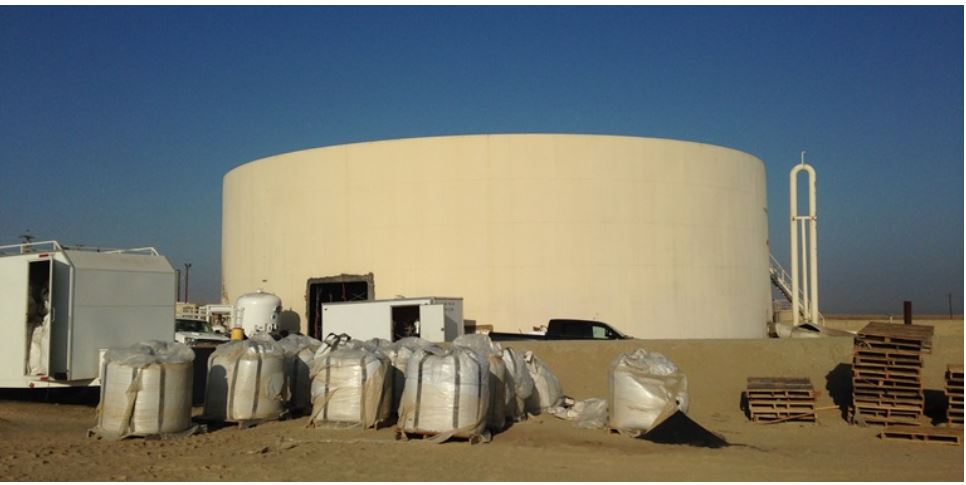
Successful tank-lining work depends on coordinating substrate repair, surface preparation, environmental control, application, inspection, safety, and return-to-service requirements.
The Bigger Lesson: Tank Lining Is a System
It would be easy to describe this project simply as the application of a high-temperature epoxy lining. The actual work was much broader.
The crew had to create access, remove an existing coating, control dust, manage soluble salts, identify damaged steel, coordinate welding and plate replacement, maintain environmental conditions, stripe-coat details, operate plural-component spray equipment, monitor hazardous atmospheres, and return the tank to service within the required schedule.
The lining material mattered, but its success depended on every one of those supporting activities.
THINK IN PROJECT-LIFECYCLE TERMS
Access & Safety Planning
↓
Surface Preparation & Steel Repair
↓
Environmental Control
↓
Application & Inspection
↓
Cure & Return to Service
BOTTOM LINE
Successful tank lining depends on treating surface preparation, steel repair, environmental control, application, safety, inspection, and return-to-service planning as one coordinated system—not as separate steps.
HISTORICAL PROJECT NOTE
This case study describes a project originally reported in 2014. Product names, application limits, surface-preparation designations, safety requirements, certification programs, equipment, and manufacturer recommendations may have changed. Current projects should follow the current specification, applicable standards, manufacturer product data, qualified inspection requirements, and site-specific safety procedures.
SOURCE
This article by Jennifer Frakes was originally published by CoatingsPro Magazine. Republished with permission.
The original case study featured NTS, Inc., Occidental of Elk Hills, and Sherwin-Williams protective and marine coatings.
COATINGS & OIL AND GAS RESOURCES
Explore Surface Preparation, Coatings & Asset Protection
AMPP resources cover protective coatings, surface preparation, tank linings, inspection, corrosion control, pipelines, storage assets, and industrial coating application.
EXPLORE MORE
Tank Coating & Corrosion Resources
Pipeline & Underground Systems Resources →
Corrosion Reference Library →
Education for Coating Applicators →
AMPP Education →
AMPP Standards →

Have photos or videos from the field? Submit them to AMPP →