FBE Application & Inspection: Common Challenges and How to Avoid Them
PIPELINES · FUSION-BONDED EPOXY
Fusion-bonded epoxy (FBE) can provide durable corrosion protection for pipelines and related infrastructure—but performance depends heavily on surface preparation, substrate temperature, powder application, curing, and inspection.
Small process errors can lead to poor adhesion, holidays, incomplete cure, inconsistent coating thickness, premature deterioration, and costly repairs. Understanding the most common FBE application and inspection problems can help applicators and inspectors identify issues before they become larger failures.
AT A GLANCE
Five common FBE application and inspection problems
- Inadequate surface preparation can prevent proper adhesion.
- Incorrect preheat temperature can interfere with melting, flow, bonding, and cure.
- Poor powder application can create thin areas, excessive buildup, pinholes, or holidays.
- Improper curing can leave the coating unable to achieve the intended properties.
- Incomplete inspection can allow defects to remain undetected before the asset enters service.
IN THIS ARTICLE
Surface preparation · Preheat temperature · Powder application · Curing · Inspection and holidays · Common questions
FBE is widely used to protect steel pipelines and related infrastructure from corrosion. During application, epoxy powder is applied to a properly prepared and heated steel surface, where it melts, flows, bonds, and cures into a protective coating.
The process can produce a high-performance corrosion-control system, but each stage depends on the one before it. A clean surface cannot compensate for incorrect heating. Correct heating cannot compensate for poor powder application. And a properly applied coating can still enter service with defects if inspection is incomplete.
KEY IDEA
FBE performance depends on the complete process.
Surface preparation, heating, application, cure, handling, and inspection should be treated as a connected quality-control system rather than separate tasks.
1. Surface Preparation Problems
THE CHALLENGE
FBE is highly sensitive to surface cleanliness and profile. Remaining contaminants, inadequate abrasive blasting, or an unsuitable anchor profile can interfere with adhesion and contribute to premature coating failure.
What to watch for
- Flash rust or mill scale before coating
- Over- or under-blasted surfaces
- Oil, grease, dust, or soluble salts remaining on the steel
- Surface profile outside the specified range
How to reduce the risk
- Verify the specified level of blast cleaning, such as near-white metal blast cleaning where required
- Measure surface profile using the method required by the specification
- Minimize unnecessary delay between blasting and coating
- Check for soluble salts or other contamination where required
Typical profile ranges: Some FBE applications may specify profiles in the approximate range of 1.5–4.0 mils, but the required surface profile should always come from the coating manufacturer’s technical data sheet and the project specification.
2. Incorrect Preheat Temperature
THE CHALLENGE
The steel substrate must reach the temperature required for the specific FBE product. If the substrate is too cool, the powder may not melt, flow, bond, or cure as intended. Excessive temperature can also damage the coating or interfere with proper film formation.
What to watch for
- Uneven heating around or along the pipe
- Discoloration or signs of overheating
- Poor adhesion in cooler areas
- Temperature variation between measurement locations
How to reduce the risk
- Use calibrated temperature-measurement equipment
- Verify temperature at representative locations
- Heat the substrate as uniformly as practical
- Follow the coating manufacturer’s technical data sheet for the required application window
Typical application temperatures: Some FBE systems are applied to steel heated within an approximate range of 180–250°C (356–482°F), but the correct temperature depends on the specific powder formulation, line conditions, pipe characteristics, and manufacturer requirements.
3. Poor Powder Application Technique
THE CHALLENGE
Inconsistent powder delivery, equipment problems, poor technique, or improper setup can create areas with insufficient or excessive coating thickness. These defects can compromise the continuity and performance of the coating system.
What to watch for
- Visible thin areas
- Exposed substrate
- Excessive coating buildup
- Pinholes, voids, or fisheyes
- Uneven film thickness
How to reduce the risk
- Maintain and calibrate electrostatic application equipment
- Monitor powder delivery and spray pattern
- Use a consistent application technique
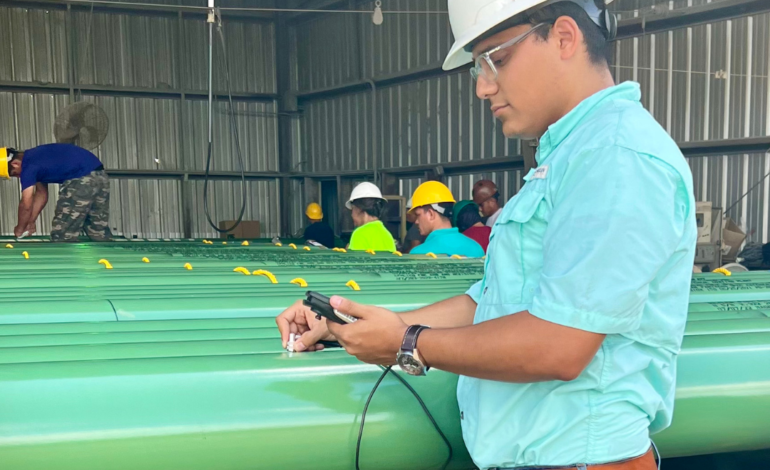
- Measure coating thickness according to the project inspection plan
Coating thickness: Some single-layer FBE systems may use dry-film thicknesses in the approximate 14–20 mil range. The actual acceptance criteria should come from the applicable specification and coating manufacturer’s requirements.
4. Improper Curing
THE CHALLENGE
FBE must complete the required cure process to develop the properties expected from the coating system. Inadequate cure can affect hardness, adhesion, chemical resistance, handling performance, and long-term durability.
What to watch for
- Soft or tacky coating
- Unexpected hardness results
- Poor adhesion
- Failure to meet specified cure-validation requirements
How to reduce the risk
- Control heating, application, and cooling conditions
- Follow specified cure times and temperature requirements
- Avoid unintended premature cooling or quenching
- Use the cure-validation method required by the coating manufacturer or project specification
INSPECTION NOTE
Cure evaluation methods vary by coating system and specification. Tests such as solvent resistance or other manufacturer-approved methods may be used where required to verify that the coating has reached the expected degree of cure.
5. Inadequate Inspection or Missed Holidays
THE CHALLENGE
Even a well-controlled application process can produce isolated defects. Holidays, pinholes, voids, damage, or areas of insufficient coating thickness may be difficult or impossible to identify through visual inspection alone.
What to watch for
- Incomplete holiday testing
- Missing or inconsistent DFT documentation
- Damage around welds or repairs
- Defects at complex geometries or handling points
How to reduce the risk
- Perform holiday testing using equipment appropriate for the coating system and thickness
- Document coating-thickness measurements as required
- Inspect repaired and high-risk areas carefully
- Reinspect areas after repairs or handling where required
FBE QUALITY CONTROL
Five stages. One coating system.
Successful FBE application depends on controlling each stage of the process: prepare the steel correctly, achieve the required substrate temperature, apply the powder uniformly, allow the system to cure as specified, and verify the finished coating before it enters service.
Preventing FBE Problems Before They Become Failures
Many FBE defects begin as small process deviations: contamination left on the steel, uneven preheating, inconsistent powder delivery, incomplete cure, or an inspection step that was rushed or skipped.
Good results depend on trained personnel, calibrated equipment, clear specifications, manufacturer guidance, careful documentation, and disciplined inspection throughout the process. Catching a problem during application is usually far easier than addressing it after the coated asset enters service.
Common Questions About FBE Application and Inspection
Quick answers about fusion-bonded epoxy coating application, cure, thickness, and inspection.
What is fusion-bonded epoxy coating?
Fusion-bonded epoxy is a thermosetting powder coating commonly used to protect steel pipelines and other infrastructure from corrosion. The powder is applied to a prepared and heated substrate, where it melts, flows, bonds, and cures into a protective film.
Why is surface preparation important for FBE?
The coating must bond directly to the prepared steel surface. Contamination, mill scale, rust, soluble salts, dust, or an unsuitable surface profile can interfere with adhesion and coating performance.
What temperature is required to apply FBE?
The correct application temperature depends on the specific FBE product and project requirements. Some systems may use substrate temperatures around 180–250°C (356–482°F), but the manufacturer’s technical data sheet and applicable specification should determine the actual range.
What is a holiday in an FBE coating?
A holiday is a discontinuity or defect in the coating that leaves the substrate insufficiently protected. Holidays can include pinholes, voids, cracks, damage, or other breaks in coating continuity and may require electrical holiday detection to identify.
How is FBE coating thickness checked?
Coating thickness is measured using appropriate calibrated inspection equipment and compared with the project specification and coating-system requirements. Measurement locations, frequency, and acceptance criteria should follow the applicable inspection procedure.
BUILD YOUR FBE SKILLS
Strengthen Your FBE Application and Inspection Knowledge
AMPP’s Fusion Bonded Epoxy (FBE): Application and Inspection Level 1 program helps professionals build practical knowledge around surface preparation, application, inspection, quality control, and coating performance.

Have photos or videos from the field? Submit them to AMPP →