Corrosion of concrete buildings: How can we prevent the next disaster?
REINFORCED CONCRETE · STRUCTURAL DURABILITY · CORROSION · INSPECTION · SURFSIDE
The 2021 collapse of Champlain Towers South in Surfside, Florida, became one of the most consequential building failures in recent U.S. history. It also demonstrated why deterioration in reinforced concrete cannot be evaluated in isolation from structural design, construction, loading, waterproofing, inspection, and maintenance.
On June 24, 2021, portions of the 12-story oceanfront condominium collapsed in Surfside, killing 98 people. The National Institute of Standards and Technology (NIST) subsequently launched an extensive investigation to determine how and why the failure occurred.
WHAT WE KNOW NOW
Corrosion was important—but it was not the only problem.
NIST’s 2026 technical findings identified severe original design deficiencies, deviations between the design and as-built construction, added loads, and long-term degradation as factors that progressively reduced already-low margins against structural failure. Corrosion of reinforcing steel was identified as the most significant long-term degradation mechanism.
How the Collapse Developed
After nearly five years of investigation, NIST released technical findings in June 2026 describing the most probable sequence leading to the collapse.
Investigators concluded that two connections between garage columns and the pool deck experienced punching-shear failures in early June 2021, weeks before the catastrophic collapse.
Those failures allowed cracks to develop and loads to redistribute through the pool-deck structure. Adjacent slab-column connections did not have sufficient capacity to safely carry the additional loads.
On June 24, failure spread through additional portions of the pool deck and street-level parking structure. When the pool-deck slab ultimately broke away, it damaged connections supporting the middle portion of the tower, allowing the failure to progress into the building.
THE FAILURE PROGRESSION
Critically Low Structural Margins
+
Additional Loads
+
Long-Term Deterioration Including Reinforcement Corrosion
↓
Pool-Deck Slab-Column Connection Failures
↓
Progressive Failure of the Pool Deck
↓
Failure Progressed Into the Tower
Where Corrosion Fit Into the Failure
NIST found that reinforcing steel within portions of the pool deck and street-level parking slabs had experienced corrosion, although its severity varied considerably by location.
Moderate to high corrosion tended to occur more frequently in areas with greater exposure to conditions that promoted corrosion, including locations beneath planters and areas exposed to chloride-laden water.
Evidence also showed that reinforcement corrosion had been present decades before the collapse. Structural repairs and waterproofing had been performed in the 1990s, but leakage and rust staining continued afterward.
NIST ultimately identified reinforcement corrosion—exacerbated by porous concrete, cracking, leakage, and ineffective waterproofing—as the most likely mechanism responsible for the long-term degradation that continued reducing the structure’s already-limited margins against failure.
AN IMPORTANT DISTINCTION
Corrosion should not be described as the sole cause of the Surfside collapse. NIST found that major design and construction deficiencies created most of the critically low structural margins from the beginning. Corrosion and other changes over the building’s life further reduced those margins until failure became possible.
Why Reinforced Concrete Can Corrode
Reinforced concrete combines two materials with complementary strengths. Concrete performs well in compression, while embedded steel reinforcement provides tensile capacity.
Under favorable conditions, concrete also helps protect the steel from corrosion. The highly alkaline environment around embedded carbon steel promotes formation of a thin passive oxide layer on the reinforcement.
That protection can be compromised when the environment surrounding the steel changes. Two important mechanisms are carbonation, which can reduce alkalinity, and chloride ingress, which can destabilize the passive condition at the steel surface.
THE CORROSION PATH
Moisture, Chlorides or Carbonation Affect the Concrete
↓
Protective Conditions Around the Steel Are Disrupted
↓
Reinforcement Begins to Corrode
↓
Corrosion Products Create Expansive Pressure
↓
Cracking, Delamination & Spalling Can Develop
↓
More Moisture & Contaminants Can Reach the Reinforcement
Corrosion Can Become a Self-Reinforcing Deterioration Cycle
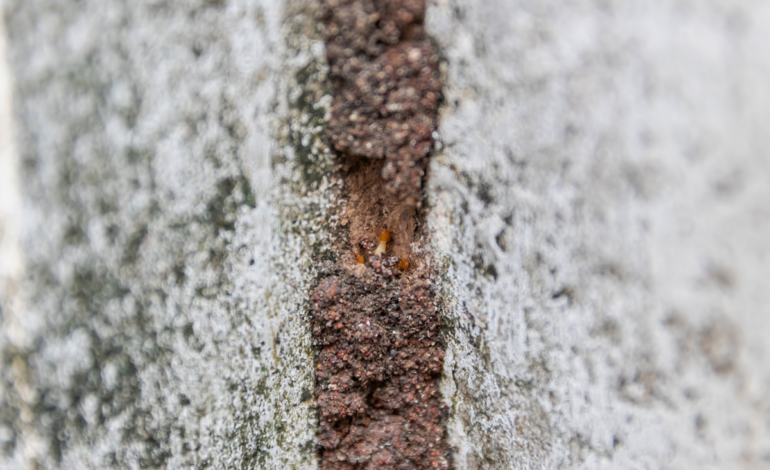
When steel reinforcement corrodes, the corrosion products occupy more volume than the original steel.
That expansion places tensile stress on the surrounding concrete. Cracks can form along the reinforcement, and continued deterioration can contribute to delamination and spalling.
Once cracking occurs, pathways for water, oxygen, chlorides, and other contaminants may become easier to penetrate—potentially accelerating the deterioration process if the underlying cause is not addressed.
VISIBLE CONCRETE DAMAGE MAY BE A SYMPTOM
Patching a damaged surface can restore appearance, but durable repair requires understanding why the concrete deteriorated in the first place and whether reinforcement corrosion, moisture ingress, structural distress, or another mechanism remains active.
Marine Environments Can Be Especially Aggressive
Champlain Towers South stood directly along the Atlantic coast. Marine structures can experience repeated exposure to moisture and chloride-bearing environments, making durability and water management particularly important.
Chlorides can move through concrete and eventually reach embedded reinforcement. Cracks, porous concrete, inadequate cover, failed waterproofing, leakage, and repeated wetting can increase the likelihood that aggressive conditions reach the steel.
NIST found that corrosion at Champlain Towers South tended to be more severe in areas exposed to stronger corrosion-inducing environments, including areas associated with chloride-laden water.
Inspection Has to Look Beyond Appearance
One of the enduring lessons from Surfside is the importance of recognizing deterioration as information rather than simply as a cosmetic problem.
Cracking, spalling, exposed reinforcement, rust staining, persistent leakage, failed waterproofing, ponding water, delamination, and recurring repairs can all warrant closer investigation.
The appropriate evaluation may require expertise from several disciplines, including structural engineering, concrete durability, corrosion, waterproofing, nondestructive evaluation, materials testing, and repair design.
A BETTER WAY TO READ DETERIORATION
Observe the Damage
↓
Determine the Mechanism
↓
Evaluate Structural Significance
↓
Address the Cause
↓
Repair & Monitor
Repairing Corrosion-Damaged Reinforced Concrete
There is no single repair method appropriate for every corrosion-damaged concrete structure. The repair strategy should be based on the cause and extent of deterioration, structural requirements, exposure environment, remaining service-life objectives, and condition of the reinforcement.
Traditional concrete repair may involve removing unsound or contaminated concrete, exposing affected reinforcement, cleaning or replacing steel where required, and rebuilding the section with an appropriate repair material.
Depending on the structure and deterioration mechanism, other protective measures may be incorporated to reduce future moisture or contaminant ingress or directly control the corrosion process.
A REPAIR PROGRAM MAY INCLUDE
- Removal of deteriorated or contaminated concrete
- Evaluation of exposed reinforcing steel
- Reinforcement cleaning, treatment, supplementation, or replacement where required
- Compatible concrete repair materials
- Protective coatings or surface treatments
- Waterproofing and improved water management
- Corrosion-control systems where appropriate
- Post-repair inspection and monitoring
Cathodic Protection Can Be Part of the Solution
For appropriate reinforced-concrete structures, cathodic protection can be used to control reinforcement corrosion electrochemically.
Systems may use sacrificial—or galvanic—anodes, or an impressed-current cathodic protection system. Selection depends on the structure, environment, electrical continuity, reinforcement condition, repair objectives, design requirements, and ability to monitor and maintain the system.
Cathodic protection is not a substitute for structural evaluation or necessary structural repair. It addresses the electrochemical corrosion process and must be incorporated into an appropriate overall rehabilitation strategy.
The Broader Lesson From Surfside
Surfside should not be reduced to a single technical failure mechanism. The evidence points instead to the way multiple vulnerabilities can accumulate across the life of an asset.
Design decisions establish the structure’s original margins. Construction determines whether the intended design is actually achieved. Waterproofing and drainage influence environmental exposure. Maintenance affects whether deterioration is corrected. Inspection determines whether developing problems are recognized and properly interpreted.
Corrosion management belongs inside that larger lifecycle approach.
THINK IN LIFECYCLE TERMS
Sound Design + Proper Construction + Water Management + Inspection + Corrosion Control + Timely Repair
↓
Better Control of Structural Deterioration & Risk
BOTTOM LINE
The Surfside collapse was not caused by corrosion alone. But NIST’s investigation shows why corrosion cannot be dismissed as a cosmetic maintenance problem: in a structure already compromised by design, construction, loading, or other vulnerabilities, long-term reinforcement corrosion can further reduce structural capacity and margins against failure.
2026 TECHNICAL UPDATE
This article was originally written while the Champlain Towers South investigation was still underway. It has been updated to reflect technical findings released by the National Institute of Standards and Technology in June 2026.
Sources & Additional Reading
- NIST: Champlain Towers South Collapse Investigation
- NIST: 2026 Technical Findings on the Champlain Towers South Collapse
- American Concrete Institute: Protection of Metals in Concrete Against Corrosion
- Materials Performance: Correcting Concrete Corrosion
- Materials Performance: Corrosion Damage in Reinforced Concrete
- Materials Performance: Galvanic Cathodic Protection of Corroded Reinforced Concrete Structures
LEARN MORE
Understand Corrosion Before It Becomes a Bigger Problem
Explore AMPP resources on corrosion mechanisms, reinforced concrete, inspection, cathodic protection, coatings, and materials protection.

Have photos or videos from the field? Submit them to AMPP →