Fire Protection at a Fractionation Plant
INTUMESCENT FIREPROOFING · STRUCTURAL STEEL · OIL & GAS · PROJECT EXECUTION
Large-scale passive fire protection is not only a coatings challenge. It is also a sequencing, logistics, fabrication, weather-control, and quality-management challenge.
At the Oneok Hydrocarbon LP Fractionation Plant in Mont Belvieu, Texas, PK Industrial applied intumescent fireproofing and protective coatings to approximately 300,000 square feet (27,871 m²) of structural steel, vessel skirts, saddles, pipe supports, and related components. The project was divided into three application phases to move as much work as practical away from the final field site.
THE THREE-PHASE APPROACH
Shop Application
↓
Module-Shop Assembly & Touch-Up
↓
Field Completion
↓
Reduced On-Site Coating Work
Why the Project Was Split Into Three Coating Phases
According to PK Industrial operations manager Landon Riggs, the project stretched across roughly two years of construction. Using both PK Industrial coating shops and off-site module shops allowed much of the fireproofing work to be completed before the modules reached the plant.
PROJECT TEAM REPORTED BENEFITS
Riggs reported that the phased approach improved the overall production schedule by approximately 10–15% and reduced the amount of fireproofing that had to be performed after modules arrived in the field.
What was being protected?
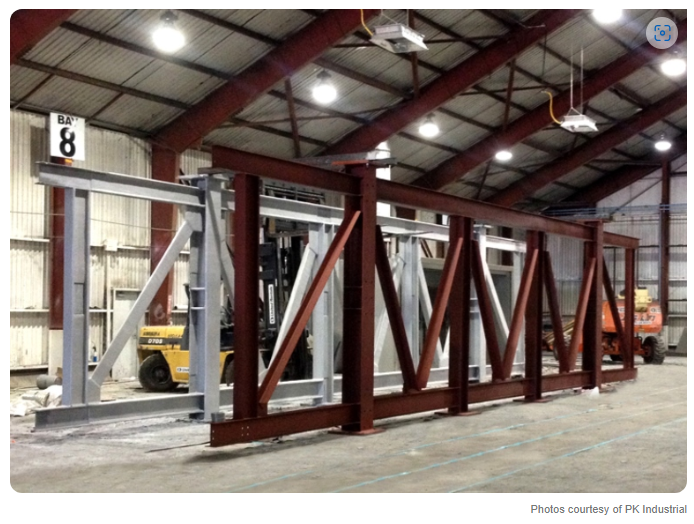
A large portion of the new structural steel was used in modular pipe racks—prefabricated structural frames that carry piping, cable trays, and other equipment. The project also included vessel skirts supporting vertical process vessels and saddles supporting horizontal pressure vessels and equipment.
Other structures were stick-built in the field, meaning beams, columns, pipe supports, and equipment structures were erected piece by piece rather than being assembled into modules beforehand.
Phase One: Coating Structural Steel in the Shop
The first phase took place at PK Industrial coating facilities in Houston, Texas, and Augusta, Kansas. Using two shops helped distribute the workload and support the project’s fabrication and shipping schedule.
The source reports that approximately 20 to 30 crew members were involved in the shop-coating phase at a given time.
Phase Two: Completing Coating Work at the Module Shops
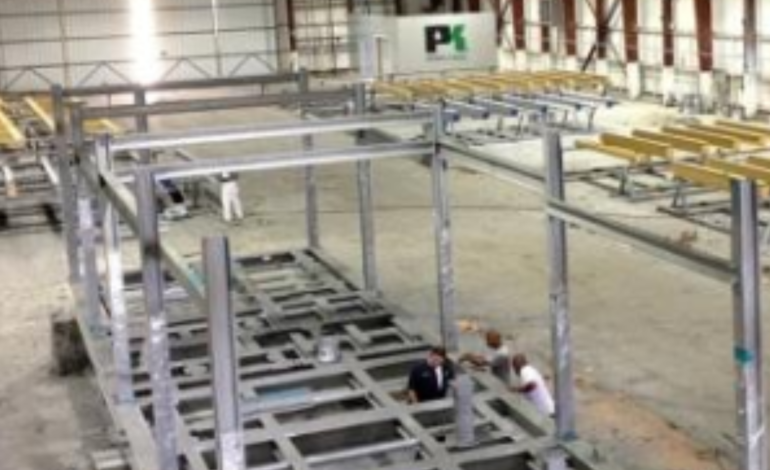
After the individual beams and columns were coated, they were shipped to off-site module fabrication facilities where larger sections of the pipe racks were assembled.
Once bolted and welded connections were created during assembly, crews applied the required intumescent fireproofing and protective coatings to those connection areas. The article reports crews of approximately 15 people working during this phase.
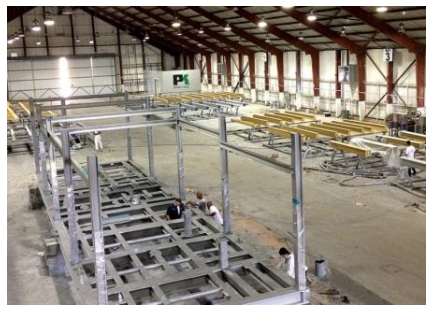
Much of the coating and fireproofing work was completed before the modules reached the final plant site.
Phase Three: Field Completion at the Plant
Completed modules were transported to Mont Belvieu and erected at the site. The remaining work included fireproofing and coating field-bolted connections and areas that could not be completed before final assembly.
The project involved more than 120 shipments from PK Industrial facilities to module shops and the plant. Float-deck trailers were used because of the size and varied configurations of the steel components.
THE LOGISTICS LESSON
Where the coating is applied can be as important as how it is applied.
Moving coating and fireproofing work into controlled shop environments can reduce field congestion and weather exposure, but it requires coordination among fabrication, coating, transportation, module assembly, erection, inspection, and field touch-up.
Surface Preparation Before Fireproofing
The project specified near-white metal blast cleaning before application of the protective systems. The original article refers to the then-current designation NACE No. 2/SSPC-SP 10.
Proper surface preparation was essential because the subsequent primer, intumescent coating, reinforcing mesh, and topcoat depended on the prepared steel and each preceding layer to form the specified system.
SPECIFICATION NOTE
Surface-preparation designations, product names, required profiles, environmental limits, thicknesses, reinforcement requirements, and inspection criteria should always be taken from the current project specification, applicable standard, approved fireproofing design, and current manufacturer documentation.
How the Intumescent Fireproofing System Worked
The project used International Paint Chartek 1709, an epoxy intumescent passive fire-protection system specified for portions of the structural steel within the plant’s fire envelope.
Intumescent fireproofing is designed to react to severe heat by forming an insulating char layer that slows heat transfer to the underlying steel. That delay helps the protected structural member maintain its load-bearing capability for the period represented by the tested and approved system design.
PASSIVE FIRE PROTECTION
Intense Heat Exposure
↓
Intumescent Coating Reacts
↓
Insulating Char Develops
↓
Heat Transfer to Steel Is Delayed
The UL 1709 Hydrocarbon Fire Exposure
The project article describes Chartek 1709 as being used in UL 1709-rated hydrocarbon-fire assemblies. UL 1709 is intended for rapid-rise fire exposure representative of severe hydrocarbon-fire conditions encountered in petroleum and petrochemical facilities.
The source explains that the test exposure rapidly raises furnace temperature to approximately 2,000°F (1,093°C) within five minutes and then maintains the high-temperature exposure while the protected assembly is evaluated.
The important project-design point is that fire-resistance performance depends on the complete tested or approved assembly—not simply the presence of an intumescent coating.
FIRE RATING ≠ COATING THICKNESS ALONE
Required intumescent thickness can vary with the structural member, section factor, fire-resistance period, approved system design, primer, reinforcement, topcoat, application method, and other project conditions. The current approved design and manufacturer documentation should govern.
The Historical System Used on This Project
The 2014 project article documents the following products and thickness ranges. These are included as part of the historical case study and should not be treated as a current specification for another project.
CHARTEK SYSTEM REPORTED IN THE SOURCE
- Primer: International Intercure 200HS at 2–3 mils (51–76 μm).
- FP-2 Chartek 1709: minimum average 417 mils (10,592 μm), with HK-1 carbon-fiber mesh installed at the midpoint.
- FP-3 Chartek 1709: minimum average 599 mils (15,215 μm), with HK-1 carbon mesh installed at the midpoint.
- Topcoat: International Interthane 990 at 3–4 mils (76–102 μm).
The article reports that plural-component spray equipment was used for shop application, while different pneumatic spray equipment was used for field work.
Not Every Steel Member Received the Same Coating System
The fireproofing system was only one part of the overall corrosion-protection strategy. Other structural steel received conventional protective coating systems based on location and anticipated exposure.
EPOXY / EPOXY / URETHANE
Used on designated structural steel, including portions outside the fireproofing scope.
GLASS-FLAKE EPOXY / POLYURETHANE
Used for selected exterior steel exposed to more severe non-immersion conditions, including areas near cooling-tower fans.
Historical epoxy/epoxy/urethane system
- Intercure 200HS: 3–4 mils (76–102 μm).
- Intergard 475: 4–6 mils (102–152 μm).
- Interthane 990HS: 2–3 mils (51–76 μm).
Historical glass-flake epoxy/polyurethane system
- Interzone 505: 14–18 mils (356–457 μm).
- Interthane 990: 2–3 mils (51–76 μm).
Weather Became Part of the Coatings Plan
The module shops were located along the Gulf Coast in Texas and Louisiana, where rain and rapidly changing weather could interfere with surface preparation and coating application.
According to project coordinator Joe Birk, temporary structures were built around modules when necessary to help maintain conditions within the coating manufacturer’s application requirements and reduce weather-related disruption.
The project also experienced a hurricane-related shutdown in Louisiana. Work sites were evacuated and remained closed until personnel were cleared to return.
ENVIRONMENTAL CONTROL IS PART OF APPLICATION QUALITY
The coating cannot be separated from the conditions in which it is applied.
Temperature, humidity, surface temperature, moisture, wind, precipitation, dew point, ventilation, and cure conditions can all affect whether coating and fireproofing work can proceed within specification.
Safety Across Shops, Module Yards, and the Field
The project included full-time site safety representatives during each phase. The original article also documents the PPE and fall-protection practices being used by the project team at that time.
Because the article dates to 2014, those specific PPE descriptions should be understood as historical project information rather than universal or current requirements.
CURRENT SAFETY REQUIREMENTS GOVERN
PPE, respiratory protection, fall protection, access systems, chemical handling, ventilation, spray application, and other safety controls should be based on the current hazard assessment, applicable regulations, manufacturer information, employer procedures, and project requirements.
What This Project Demonstrates
The Oneok project is useful not because every future petrochemical project should copy its exact materials or sequence, but because it shows how coatings and passive fire protection become intertwined with the overall construction plan.
PROJECT TAKEAWAYS
- Plan coating work around fabrication and erection—not as an isolated final step.
- Move suitable work into controlled environments when the project and approved system allow it.
- Define how bolted and welded connections will be completed after assembly.
- Coordinate shipping so finished coatings and fireproofing are protected from unnecessary damage.
- Match each structural area to its actual corrosion and fire-protection requirements.
- Build weather and environmental-control contingencies into the schedule.
- Plan inspection and repair across every transition between shop, module yard, transportation, and field erection.
Fireproofing Is a System, Not a Single Product
The case study also reinforces a broader principle of passive fire protection: performance depends on the complete system and how it is installed.
Surface preparation, primer compatibility, reinforcement, intumescent thickness, geometry, topcoat, environmental conditions, application quality, inspection, repairs, and the approved fire-resistance design all contribute to the final result.
THINK IN SYSTEM TERMS
Surface Preparation
+
Approved Materials & Thickness
+
Application Conditions
+
Inspection & Repair
↓
Specified Fire-Protection Performance
BOTTOM LINE
Large-scale fireproofing succeeds when coating-system requirements are integrated with fabrication, modular construction, transportation, environmental control, inspection, safety, and field execution from the beginning of the project.
HISTORICAL PROJECT NOTE
This case study documents a project performed in the 2013–2014 period. Product names, coating systems, safety practices, standards designations, fireproofing approvals, and project requirements are presented as historical information. Current specifications, standards, manufacturer documentation, approvals, and safety requirements should govern present-day work.
SOURCE
This article by Jennifer Frakes was originally published by CoatingsPro Magazine. Republished with permission.
BUILD YOUR COATINGS KNOWLEDGE
Explore Protective Coatings and Oil & Gas Resources
AMPP resources cover protective coatings, surface preparation, inspection, corrosion control, fireproofing-related project practices, and materials protection for oil and gas assets.
EXPLORE MORE
Protective Coatings & Oil and Gas Resources
Oil & Gas Corrosion Reference Library →
AMPP Education →
AMPP Standards →
CoatingsPro Magazine →
Science Behind It: Intumescent Coatings on Steel →

Have photos or videos from the field? Submit them to AMPP →