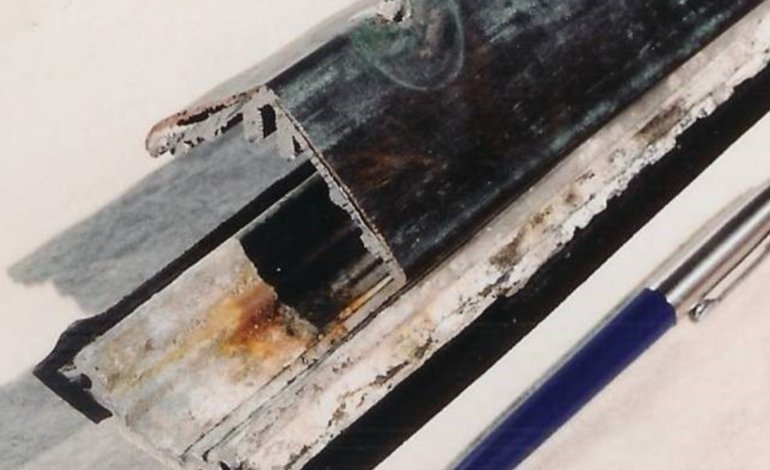
Forms of Corrosion
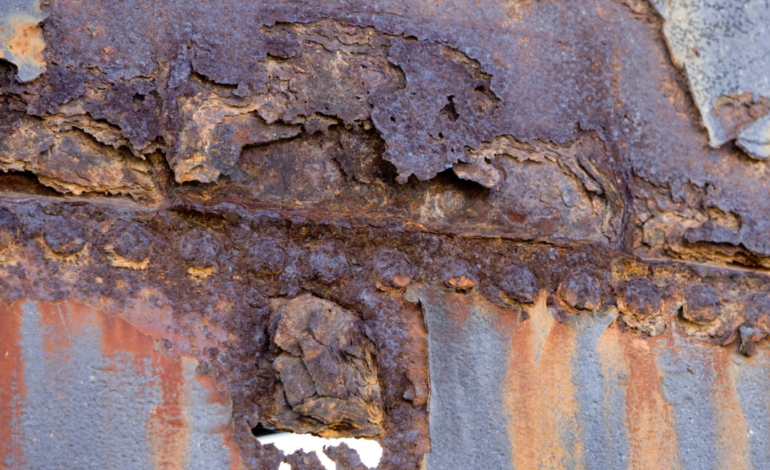
CORROSION BASICS · LOCALIZED ATTACK · FAILURE ANALYSIS
Localized corrosion can be especially challenging because intense attack may develop in relatively small areas while much of the surrounding surface remains less affected.
Uniform corrosion distributes metal loss over a broader area, which can sometimes make remaining life easier to estimate. Localized attack is different: damage is concentrated at specific sites, and those locations may penetrate much more rapidly than the surrounding surface.
WHAT MAKES LOCALIZED CORROSION DIFFERENT?
Small Area of Attack
+
Concentrated Metal Loss
↓
Potentially Rapid Local Penetration
What Is Localized Corrosion?
Localized corrosion is selective attack concentrated at limited areas or zones on a metal surface exposed to a particular environment. In many cases, most of the surface experiences little or comparatively minor attack while severe deterioration develops at specific locations.
The exact appearance and mechanism depend on the material, environment, geometry, mechanical conditions, electrochemical differences, and other factors influencing the corrosion process.
Pitting Corrosion: Concentrated Attack in Small Areas
Pitting is one of the most familiar forms of localized corrosion. Small volumes of metal are removed from concentrated areas, producing cavities, craters, or pits in the surface.
Because the attack is concentrated, local penetration can be much greater than would be suggested by an average corrosion rate calculated across the entire surface. The original source notes that pitting penetration rates may exceed uniform-corrosion rates by more than an order of magnitude under some conditions.
Pitting may develop in stagnant or slow-moving liquids, but localized attack can also be associated with crevices, deposits, cavitation, impingement, fretting, and other conditions that create local differences across a surface.
WHY PITTING CAN BE DECEPTIVE
A surface can show relatively limited overall metal loss while individual pits penetrate deeply enough to threaten containment, wall thickness, or mechanical performance.
Intergranular and Transgranular Attack
Localized attack does not always form visible surface pits. In some cases, preferential corrosion follows specific paths through the metal’s microstructure.
INTERGRANULAR
Attack along grain boundaries
Metal may be preferentially removed along structural differences at grain boundaries, producing narrow paths, fissures, or cracking.
TRANSGRANULAR
Attack across the grains
Preferential damage may also cross through the grains themselves rather than following grain boundaries.
When Corrosion and Stress Interact
Some forms of cracking involve an interaction between the material, environment, and mechanical stress. Stress corrosion cracking (SCC), for example, can produce cracks that may progress through a component under the right combination of susceptible material, tensile stress, and environment.
Crack paths may be intergranular, transgranular, or a combination depending on the alloy and environment. In severe cases, crack growth can eventually contribute to leakage, perforation, or fracture.
Other deterioration mechanisms can also produce subsurface cracking, including hydrogen-related cracking and corrosion fatigue. Correctly distinguishing among them may require more than visual examination.
CRACKING MECHANISMS CAN LOOK SIMILAR
Appearance alone may not identify the cause.
Stress corrosion cracking, corrosion fatigue, hydrogen-related cracking, and other mechanisms may require metallography, fracture examination, operating-history review, environmental data, or additional analysis to differentiate.
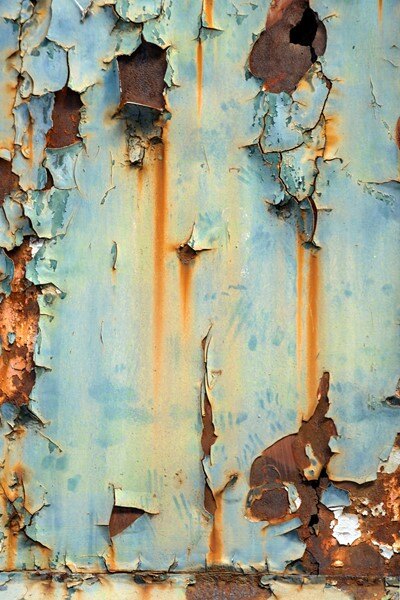
Localized deterioration may present differently depending on the corrosion mechanism, material, environment, and condition of the surface.
Selective Dissolution Can Weaken an Alloy Without Obvious Metal Loss
Localized corrosion does not always create an obvious hole, pit, or crack. In selective dissolution, one constituent may be preferentially removed from an alloy while the overall external dimensions appear relatively unchanged.
The remaining material may appear intact to the unaided eye but become porous, brittle, or mechanically weak because the original alloy structure has been altered.
DEZINCIFICATION
Brass
Zinc is preferentially removed from susceptible brass, leaving a copper-rich porous structure with reduced mechanical integrity.
GRAPHITIC CORROSION
Cast iron
Iron may be preferentially removed while a graphite-rich structure remains, potentially leaving the component externally recognizable but mechanically weakened.
Some Forms of Corrosion Are Easier to Recognize Than Others
The original reference groups corrosion damage according to how readily it can be identified. That distinction remains useful because the required inspection method depends heavily on the type and location of damage.
01 · VISIBLE TO THE UNAIDED EYE
Some forms of damage can be recognized during visual inspection because the corrosion products, pits, cracking, surface loss, or other features are readily apparent.
02 · REQUIRES INSPECTION AIDS
Other damage may be easier to identify using methods such as penetrant testing, magnetic particle testing, low-power microscopy, or other appropriate nondestructive examination techniques.
03 · REQUIRES DETAILED ANALYSIS
Some mechanisms cannot be confidently identified without optical microscopy, electron microscopy, metallographic examination, chemical analysis, fracture analysis, or other specialized methods.
Failure Analysis Requires More Than a First Impression
A visual examination of a failed component can provide important clues about what happened. Corrosion products, crack orientation, pit morphology, coating condition, deposits, geometry, and other features may all help narrow the possibilities.
However, the visible damage is only part of the evidence. Operating history, material composition, temperature, chemistry, stress, flow, fabrication history, maintenance records, and environmental conditions may be equally important.
An incomplete failure analysis can lead to an incorrect diagnosis—and therefore an ineffective corrective action. Similar-looking damage can result from different mechanisms that require very different prevention strategies.
A BETTER FAILURE-ANALYSIS QUESTION
What Does the Damage Look Like?
+
What Conditions Existed?
+
What Does the Material Evidence Show?
↓
Which Mechanism Best Fits All the Evidence?
More Than One Mechanism May Be Involved
Real assets do not always fail according to a single textbook mechanism. Geometry, deposits, stress, flow, material condition, coating defects, chemistry, and temperature may interact in ways that produce overlapping forms of deterioration.
For that reason, identifying a corrosion form is only the beginning. Effective mitigation depends on understanding the conditions that produced it and selecting corrective actions that address the actual mechanism or combination of mechanisms.
BOTTOM LINE
Localized corrosion concentrates damage where it may be easiest to miss. Correct identification requires looking beyond average metal loss and understanding the material, environment, geometry, stress, and evidence left by the attack.
Reference
C.P. Dillon, Forms of Corrosion: Recognition and Prevention (Houston, TX: NACE, 1982).
This article was adapted by MP Technical Editor Norm Moriber from Corrosion Basics—An Introduction, Second Edition, Pierre R. Roberge, ed. (Houston, TX: NACE International, 2006), pp. 353–355.
SOURCE
This article by Norm Moriber was originally published online by Materials Performance Magazine on May 4, 2020. Republished with permission.
KEEP LEARNING
Explore More Corrosion Fundamentals
Learn more about corrosion mechanisms, materials behavior, inspection, prevention, and control through AMPP technical and education resources.
EXPLORE MORE
Corrosion Basics & Technical Resources
Corrosion Reference Library →
Basic Corrosion Course →
AMPP Education →
Materials Performance Magazine →

Have photos or videos from the field? Submit them to AMPP →