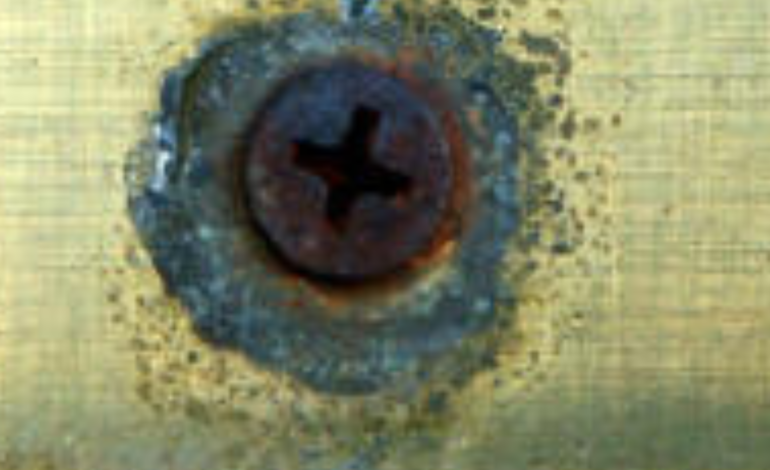
New Modeling Approach for Predicting Corrosion Under Insulation

CORROSION UNDER INSULATION · BIM · INSPECTION
Corrosion under insulation (CUI) is difficult to manage because the insulation system can hide the very conditions inspectors need to find.
Building information modeling (BIM) cannot replace inspection or directly confirm that corrosion is present. But when asset, environmental, design, and inspection information are incorporated into a digital model, BIM can help teams visualize CUI risk and prioritize where closer inspection may be warranted.
THE KEY DISTINCTION
BIM does not detect CUI. It can help organize and visualize the factors that influence CUI risk.
Its value depends on the quality of the data incorporated into the model and how that information is used within an inspection and integrity-management program.
AT A GLANCE
How BIM can support CUI management
- Map insulated piping and equipment within an asset.
- Associate locations with environmental and operating information.
- Highlight areas with multiple known CUI risk factors.
- Help inspection teams prioritize limited resources.
- Record inspection history and identified problem locations.
- Provide a visual layer for risk-based inspection planning.
Why Corrosion Under Insulation Matters
Insulation is widely used on piping and equipment for thermal control, personnel protection, process efficiency, condensation control, and other operational needs. However, an insulation system can also obscure the condition of the substrate beneath it.
If water or other contaminants penetrate the insulation system and remain in contact with susceptible metal, conditions may develop that support corrosion. Because the affected surface is hidden, deterioration may progress without obvious external evidence.
Depending on the asset, corrosion can contribute to wall loss, leaks, loss of containment, repair costs, production impacts, contamination concerns, or other integrity consequences.
THE CUI CHALLENGE
The insulation system can hide both moisture and corrosion, making location and prioritization as important as the inspection method itself.
How CUI Develops
CUI can develop when moisture penetrates an insulation system and reaches the underlying metal. Water may enter through damaged weather barriers, failed seals, penetrations, joints, poor detailing, condensation, washdown, weather exposure, or other pathways.
If that moisture remains trapped, drying may be slow. Contaminants such as chlorides can further influence corrosion conditions in some environments.
The actual risk varies with factors such as substrate material, operating temperature, insulation type and condition, weatherproofing, exposure, contaminants, geometry, water ingress, and time.
A TYPICAL CUI RISK PATH
Water Enters the Insulation System
↓
Moisture Reaches the Metal Surface
↓
Conditions Allow Corrosion to Develop
↓
Insulation May Hide the Deterioration
Why CUI Inspection Is Challenging
The scale of industrial piping and insulated equipment makes universal inspection impractical. Removing insulation everywhere would be disruptive, costly, and often unnecessary.
Visual inspection of the insulation system can identify obvious damage or water-entry points, but external appearance alone may not reveal the actual condition of the metal beneath the insulation.
For that reason, CUI programs often rely on risk-based screening and targeted inspection rather than treating every insulated component as equally likely to contain corrosion.
INSPECTION DOES NOT MEAN REMOVING ALL INSULATION
Different inspection and nondestructive examination methods may be used to screen, assess, or confirm suspected CUI. The appropriate method depends on the asset, insulation system, material, access, risk, and inspection objective.
Using Risk Factors to Prioritize Inspection
CUI susceptibility can be influenced by a combination of design, environmental, operating, and condition factors. These factors can be used to identify areas where additional inspection attention may be justified.
ENVIRONMENT
- Rain or washdown exposure
- Humidity
- Marine or chloride exposure
- Frequent wetting
- Outdoor weather exposure
ASSET & OPERATING CONDITIONS
- Operating temperature
- Temperature cycling
- Substrate material
- Geometry and orientation
- Equipment or piping location
INSULATION SYSTEM CONDITION
- Damaged or missing weather barriers
- Failed joints, seals, penetrations, or terminations
- Evidence of water intrusion
- Insulation age and repair history
- Previous CUI findings in similar locations
From Predictive Analysis to Risk-Based Inspection
If relevant CUI risk factors are documented, they can be combined to help rank areas for inspection. A location exposed to repeated water ingress, aggressive contaminants, susceptible materials, and unfavorable operating conditions may warrant greater attention than a comparable component without those factors.
This does not prove corrosion exists. Instead, it helps inspection teams make more informed decisions about where to focus resources and where more detailed examination may provide the greatest value.
RISK-BASED DOES NOT MEAN RISK-FREE
Prioritization helps determine where to look first—not where corrosion can or cannot exist.
Risk models should be updated as new inspection results, operating conditions, failures, repairs, and environmental information become available.
The Role of BIM in CUI Management
BIM provides a digital representation of physical assets and can associate individual components with additional information. In a CUI program, that creates an opportunity to connect the physical location of insulated piping or equipment with relevant integrity data.
Instead of relying on a separate spreadsheet or inspection report to understand where risk factors are concentrated, teams can use the model as a visual interface for organizing and interpreting that information.
A BIM-BASED CUI VIEW COULD INCLUDE
- Pipe or equipment identification
- Insulation type and age
- Operating temperature
- Exposure environment
- Previous inspection dates and findings
- Known water-entry locations
- Repair history
- Risk-ranking information
- Recommended inspection priority
Visualizing Inspection Priority
One possible approach is to represent risk or inspection priority using colors or other visual markers within the model. Higher-priority areas could be highlighted so inspectors can quickly identify locations that warrant closer attention.
The specific color scheme is less important than the methodology behind it. A useful model should be based on defined criteria and reliable information rather than a subjective visual rating alone.
THE MODEL IS ONLY AS GOOD AS ITS INPUTS
Missing, outdated, or inaccurate asset information can create misleading risk rankings. BIM should complement—not replace—inspection history, engineering evaluation, field observations, and qualified personnel.
A Practical BIM-Supported CUI Workflow
STEP 1
Map the insulated assets
Identify insulated piping, vessels, equipment, and other components within the digital model.
STEP 2
Attach relevant risk information
Associate components with material, operating, environmental, insulation, inspection, and repair data.
STEP 3
Rank inspection priority
Use defined criteria to identify components or areas with greater CUI susceptibility or consequence.
STEP 4
Perform targeted inspection
Select suitable inspection or NDE methods based on the asset and inspection objective.
STEP 5
Feed the findings back into the model
Update risk rankings, inspection history, repairs, and future inspection priorities using what was learned in the field.
BIM Can Help Make CUI Inspection More Focused
The challenge with CUI is not simply finding corrosion. It is identifying where hidden deterioration is most likely or most consequential across a potentially enormous population of insulated assets.
BIM can support that process by bringing asset location, operating conditions, environmental information, inspection history, and risk data into a visual framework. Used well, it can help inspection teams make more focused decisions about where to look next.
BOTTOM LINE
Use BIM to make inspection smarter—not to eliminate inspection.
The strongest approach combines risk information, reliable asset data, qualified personnel, appropriate inspection methods, and continuous feedback from actual field findings.
ORIGINAL SOURCE
Source: Microsol Resources →
This article by Jack Barrett of Microsol Resources first appeared on MaterialsPerformance.com on May 1, 2023. Reprinted with permission.
CORROSION UNDER INSULATION
Build Your CUI Knowledge
Explore AMPP training and technical resources focused on identifying, understanding, and managing corrosion under insulation.
MORE CUI RESOURCES
Continue Exploring Corrosion Under Insulation
Corrosion Under Insulation Course & Micro-Credential →
CUI Community of Interest →
CorrCompilation: Corrosion Under Insulation E-book →
Corrosion Reference Library →

Have photos or videos from the field? Submit them to AMPP →