Paint Is Complicated: Inspector Training Opportunities
ARCHITECTURAL COATINGS · QUALITY ASSURANCE
Successful architectural painting depends on more than selecting a color and applying paint. Surface condition, preparation, environmental conditions, coating selection, application, inspection, and documentation all influence whether a finished system meets project requirements.
Training and quality-assurance programs can help architects, specifiers, contractors, estimators, facility professionals, and inspectors better understand how those pieces work together. The Master Painters Institute (MPI), an AMPP subsidiary, provides resources focused on architectural coatings, paint systems, inspection, and quality assurance.
PRACTITIONER PERSPECTIVE
This article is based on the experience of Kirk Beggs, a longtime architectural coatings professional and MPI quality-assurance inspector. Project responsibilities, acceptance criteria, inspection requirements, and substrate-preparation obligations should always be confirmed against the governing specification, contract documents, and current MPI requirements.
AT A GLANCE
What helps an architectural paint project succeed?
- Choose the coating system for the actual environment, not simply by appearance or familiarity.
- Evaluate the substrate before painting, especially on repaint projects.
- Allow enough time for surface preparation in estimating and scheduling.
- Use quality control during application to monitor conditions and workmanship.
- Use independent quality assurance when specified to verify compliance with project requirements.
- Document conditions and observations throughout the work.
IN THIS ARTICLE
Why paint is a system · Surface condition · QC vs. QA · MPI QA inspections · Documentation · Training · Common questions
Why Architectural Painting Is More Than Applying Paint
Paint performance depends on the relationship between the substrate, environment, preparation, coating system, application, and service conditions.
A coating that performs well in a dry interior space may not be appropriate for a constantly damp, high-humidity, exterior, industrial, or chemically exposed environment. Likewise, even an appropriate coating can perform poorly if the surface is not ready or application conditions fall outside project requirements.
Substrate
Concrete, masonry, drywall, wood, steel, and previously painted surfaces each create different preparation needs.
Environment
Moisture, temperature, sunlight, abrasion, cleaning, occupancy, and chemical exposure can influence coating selection.
Preparation
Cleaning, repairs, removal of unsound material, profile, moisture condition, and other factors affect readiness for coating.
Application
Coat count, film thickness, recoat windows, mixing, environmental limits, workmanship, and curing all matter.
A COATING IS A SYSTEM
The product in the can is only one part of the finished paint system.
Good results depend on selecting the appropriate system and creating the conditions needed for that system to perform as intended.
Why Surface Condition Changes the Painting Strategy
A new substrate and an existing painted surface may require very different levels of evaluation and preparation.
On repaint projects, professionals may need to assess existing coating condition, adhesion, contamination, cracking, deterioration, moisture, substrate damage, and whether portions of the existing system can remain in place.
MPI DEGREES OF SURFACE DEGRADATION
A framework for evaluating repaint conditions
The article describes MPI’s Degrees of Surface Degradation (DSD) as a five-level scale from 0 through 4. At the low end, the existing surface is described as sound; at the highest level, deterioration may be severe enough that replacement rather than repainting is indicated.
Current MPI guidance should be consulted for the official DSD definitions, evaluation procedures, and project requirements.
ESTIMATING MATTERS
Surface preparation can represent a significant portion of a repaint project. If its complexity is underestimated during estimating or scheduling, the project may encounter delays, added cost, or pressure to coat a surface before it is ready.
What Is the Difference Between Paint Quality Control and Quality Assurance?
Quality control and quality assurance support different parts of the project.
QUALITY CONTROL · QC
Contractor process control
QC is the contractor’s process for monitoring its own work and checking that preparation and application are being performed in accordance with project requirements.
QUALITY ASSURANCE · QA
Independent verification
QA provides an independent means of verifying whether the specified materials, preparation, application, and documentation align with the project requirements.
What might a contractor QC program monitor?
- Surface temperature
- Air temperature
- Relative humidity
- Moisture conditions where relevant
- Wet film thickness (WFT)
- Dry film thickness (DFT)
- Lighting and access conditions
- Surface preparation status
- Coat sequence and application records
- Other measurements required by the specification or coating manufacturer
DOCUMENT THE WORK
Good records can turn “we did it correctly” into documented evidence of what actually happened.
Environmental readings, thickness measurements, surface observations, photographs, and daily reports can be valuable when questions arise later in the project.
What Does an MPI Quality Assurance Paint Inspection Do?
An MPI QA inspection provides independent oversight of specified architectural coating work. Depending on the project scope, that can include evaluating surface readiness, materials, preparation, application conditions, coat sequence, appearance, and documentation.
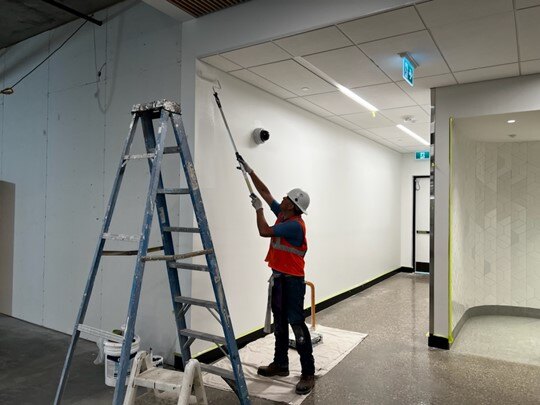
Independent QA inspection can provide another layer of documentation for owners, contractors, architects, and project teams. Photo courtesy of Kirk Beggs.
01 · BEFORE PAINTING
Evaluate whether the substrate is ready
Inspectors can identify visible contamination, incomplete preparation, surface defects, or other conditions that may need to be addressed before coatings are applied.
02 · DURING APPLICATION
Verify specified work as it progresses
Observations may include coating products, environmental conditions, application practices, film thickness, coat count, and other requirements defined by the project.
03 · THROUGHOUT THE PROJECT
Create an independent record
Written inspection reports can document observations and communicate issues to the appropriate project parties while corrective action is still possible.
WHO IS RESPONSIBLE FOR SUBSTRATE CORRECTIONS?
Responsibility for removing mortar, weld slag, contamination, surface defects, or other conditions depends on the contract documents and division of work. An inspector can document that a surface is not ready for coating, but the responsible party should be determined from the project requirements rather than assumed.
How QA Documentation Can Reduce End-of-Project Surprises
One of the practical advantages of scheduled inspection is that concerns can be documented while work is still underway rather than discovered only after the entire coating system has been completed.
Inspection reports can give owners, architects, general contractors, painting contractors, and other project participants a shared record of observations, expectations, and issues requiring follow-up.
QA DOES NOT GUARANTEE A DISPUTE-FREE PROJECT
It can, however, create a clearer record of what was observed and when.
Early documentation can make it easier for project teams to address preparation, materials, workmanship, or specification questions before they become larger closeout issues.
Why Current Paint Specifications Matter
Paint products, technologies, approved systems, and specification guidance can change over time. Using outdated specification language can create confusion or reference systems that are no longer appropriate or current.
MPI’s online resources are intended to help users work with current architectural coating information rather than relying exclusively on older printed references.
SYSTEM SELECTION
Narrow coating choices by substrate, environment, and performance needs
The original article highlights MPI’s online decision-tree functionality as a way to narrow coating-system options using factors such as substrate, exposure environment, and desired performance level. Users should consult the current MPI platform for available tools and current system recommendations.
Who Can Benefit From Architectural Coatings Training?
Coatings knowledge is useful well beyond the person holding the brush or spray gun. Anyone responsible for selecting, specifying, estimating, managing, applying, or evaluating paint systems can benefit from understanding coating fundamentals.
Architects & Specifiers
Better understand coating systems, surface condition, and specification requirements.
Painting Contractors
Strengthen estimating, QC, documentation, and understanding of specified requirements.
Facility Professionals
Make more informed decisions about repainting, maintenance, and contractor performance.
Inspectors & QA Personnel
Develop the technical knowledge needed to evaluate architectural coatings work consistently.
THE BIGGER PICTURE
Good architectural coatings work starts long before the finish coat.
Specification, substrate evaluation, preparation, training, contractor QC, independent QA, and documentation all contribute to the final result.
Common Questions About Architectural Coatings QA
Quick answers about surface preparation, inspection, quality control, and MPI resources.
What is architectural coatings quality assurance?
Quality assurance provides independent verification that architectural painting work is being performed in accordance with applicable project specifications, procedures, and acceptance requirements.
What is the difference between paint QC and QA?
Quality control is generally the contractor’s internal process for monitoring its own work. Quality assurance provides independent verification that specified requirements are being met.
Why is surface preparation important before painting?
Coatings need a suitably prepared substrate to perform as intended. Contamination, moisture, deterioration, loose material, existing coating failure, or other surface conditions can interfere with adhesion and overall system performance.
Can a QA inspection prevent every coating failure or dispute?
No. Inspection cannot eliminate every project problem or guarantee coating performance. It can provide independent observations, documentation, and opportunities to identify nonconforming conditions while corrective action may still be possible.
Who should determine whether a substrate is ready for painting?
The project specification, applicable MPI requirements, coating manufacturer guidance, contract documents, and assigned project responsibilities should determine acceptance criteria. An inspector may verify and document whether observed conditions meet those requirements.
ABOUT THE AUTHOR
Kirk Beggs is general manager of the Alberta Painting Contractors Association (APCA). At the time of the original publication, he was identified as a Master Paint Quality Assurance Specialist (MPQA) Certified Architectural Coatings Inspector and an SSPC Protective Coatings Inspector Level 1, with more than 40 years of paint and coatings industry experience.
This article by Kirk Beggs first appeared on MaterialsPerformance.com on February 1, 2023. Reprinted with permission.
MASTER PAINTERS INSTITUTE
Explore Architectural Coatings Resources
Learn more about MPI paint systems, quality assurance, architectural coatings education, approved products, and technical resources.
EXPLORE MORE
Architectural Coatings Resources
Master Painters Institute →
AMPP Education →
AMPP Standards →
Materials Performance →

Have photos or videos from the field? Submit them to AMPP →