Corrosion 101: Essentials for Asset Protection: What is corrosion?
CORROSION 101 · PART ONE
Corrosion is the deterioration of a material—usually metal—caused by a chemical or electrochemical reaction with its environment. Moisture, oxygen, salts, acids, and other conditions can drive these reactions, gradually weakening materials and reducing asset life.
An introduction to corrosion science, risk, and materials protection
AT A GLANCE
Corrosion in simple terms
- What it is: the gradual deterioration of a material through interaction with its environment.
- What drives it: electrochemical reactions involving a metal, an electrolyte, and an oxidizing agent.
- What it can cause: material loss, cracking, leaks, equipment failure, downtime, and safety risks.
- Where it occurs: pipelines, storage tanks, marine assets, bridges, reinforced concrete, and nearly every major industrial sector.
- Can it be controlled? Yes. Coatings, cathodic protection, material selection, inspection, and other corrosion-control methods can significantly reduce its impact.
Imagine a water main weakening from the inside out after years of undetected corrosion. Or a storage tank lining blistering and failing, exposing the steel underneath to corrosive chemicals. On bridges, pipelines, industrial equipment, and other critical infrastructure, corrosion can begin quietly before becoming a much larger maintenance, reliability, or safety problem.
The economic impact is enormous. Corrosion costs industries and governments billions of dollars each year through inspection, maintenance, repair, downtime, replacement, and failures. Explore AMPP’s research on the cost of corrosion →
What Is Corrosion?
Corrosion is the process by which a material—usually metal—deteriorates through chemical or electrochemical interaction with its surrounding environment.
At its core, corrosion is a natural process. Refined metals tend to move toward more chemically stable states, such as oxides or hydroxides. Electrochemical reactions drive that transformation and can gradually reduce a material’s thickness, integrity, strength, or ability to perform its intended function.
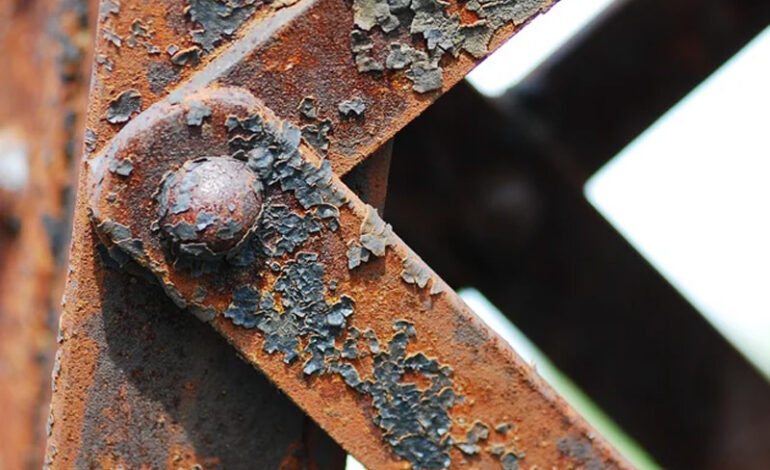
WHAT CORROSION CAN LOOK LIKE
Common examples
- Rust on carbon steel
- Pitting on stainless steel
- Concrete cracking caused by corroding reinforcing steel
- Material thinning or localized attack on industrial equipment
Corrosion is more than a cosmetic problem. Over time, deterioration can affect reliability, production, infrastructure performance, and public safety.
How Does Corrosion Happen?
A basic electrochemical corrosion process requires several elements working together. One simple way to understand the process is to think of it as a small battery operating on the surface of an asset.
01
Metal Surface
A material capable of participating in the electrochemical reaction, such as steel.
02
Electrolyte
A conductive environment, such as water containing dissolved salts or acids.
03
Oxidizing Agent
A substance that participates in the reaction. In many common corrosion processes, oxygen plays this role.
CORROSION CELL
Think of corrosion like a hidden battery.
At the anode, metal atoms lose electrons and corrosion occurs. Those electrons travel toward the cathode, while the electrolyte helps complete the electrochemical circuit. If this reaction continues uncontrolled, it can lead to material loss, thinning, damage, and eventually loss of function.
Why Is Corrosion a Global Problem?
Corrosion is much more than a maintenance issue. Its effects reach asset reliability, business continuity, infrastructure investment, environmental protection, and public safety.
$2.5T+
Estimated annual global corrosion-related costs cited in AMPP research.
3–4%
Approximate share of global GDP represented by corrosion-related costs.
Up to 35%
Share of corrosion-related costs that may be preventable using existing practices and technologies.
AMPP research has estimated global corrosion-related costs at more than $2.5 trillion annually, representing approximately 3–4% of global GDP. Research also indicates that a significant share of corrosion-related costs can be reduced through existing technologies and good corrosion-management practices.
Corrosion-related failures can contribute to pipeline ruptures, water-system problems, equipment failures, chemical releases, structural deterioration, and other serious consequences. Understanding the corrosion mechanism is an important first step toward managing those risks.
Where Does Corrosion Happen?
Corrosion affects almost every industry that depends on metals, concrete, infrastructure, transportation, energy, water, or industrial equipment. The environment and corrosion mechanism may change, but the need to understand and control deterioration remains the same.
PIPELINES
External corrosion can develop through contact with soil and moisture, while internal corrosion may be influenced by fluids, water, gases, and contaminants moving through the system.
STORAGE TANKS
Moisture, chemicals, damaged protective linings, contaminants, and microbial activity can create conditions that allow internal or external corrosion to develop.
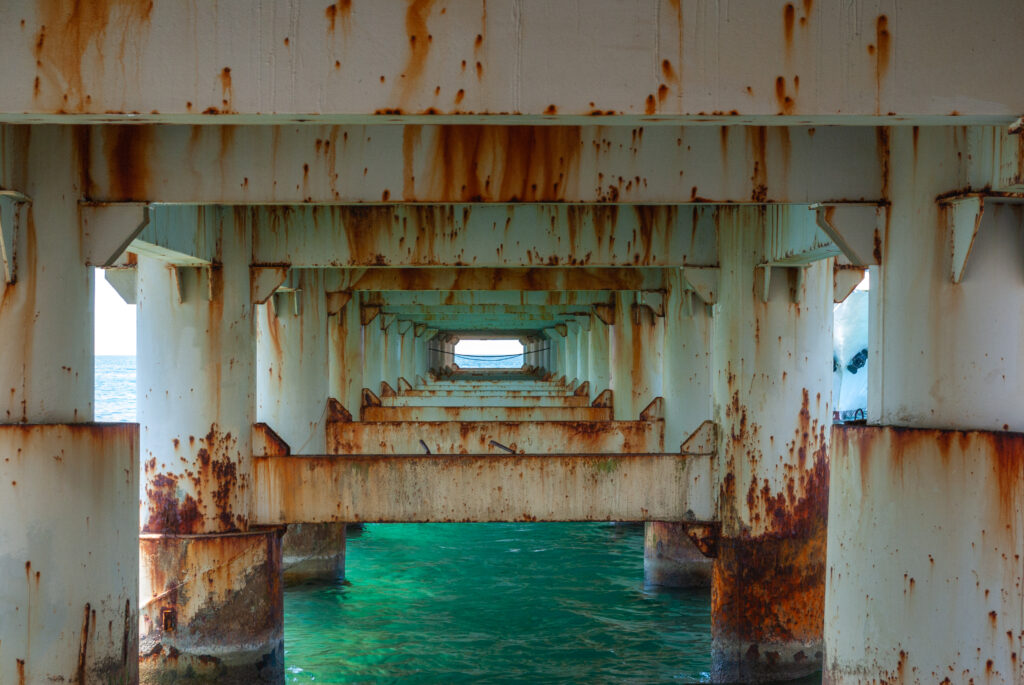
MARINE ASSETS
Saltwater, moisture, oxygen, tidal conditions, and continuous exposure make ships, ports, offshore structures, and other marine assets especially vulnerable to corrosion.
BRIDGES & CONCRETE
When reinforcing steel corrodes inside concrete, expansion can contribute to cracking, delamination, spalling, and progressive structural deterioration.
Corrosion Terms to Know
New to corrosion? These foundational terms will make it easier to understand how electrochemical corrosion works.
| Term | What It Means |
|---|---|
| Oxidation | A reaction in which a material loses electrons. At the anodic area of a corrosion cell, oxidation of the metal occurs. |
| Electrolyte | A conductive medium that allows ionic movement and helps complete the electrochemical circuit. |
| Anode | The area where oxidation occurs and metal is consumed during the corrosion process. |
| Cathode | The area where the corresponding reduction reaction occurs and electrons are consumed. |
| Galvanic Corrosion | Corrosion that can occur when dissimilar metals are electrically connected in the presence of an electrolyte. |
Can Corrosion Be Prevented?
Corrosion cannot always be eliminated completely, but it can often be significantly slowed, controlled, or managed. Effective corrosion management begins with understanding the material, environment, exposure conditions, and expected service life of the asset.
Protect the Surface
Protective coatings help separate a substrate from the surrounding environment, while cathodic protection uses electrochemical methods to control corrosion on susceptible metal surfaces.
Design for the Environment
Material selection, system design, and understanding service conditions can reduce corrosion risk and improve long-term asset performance.
Inspect, Monitor & Maintain
Inspection, monitoring, maintenance, and qualified professionals help identify deterioration early and ensure corrosion-control systems continue performing as intended.
Common Questions About Corrosion
Quick answers to some of the most common introductory questions about corrosion.
What causes corrosion?
Corrosion is caused by chemical or electrochemical reactions between a material and its environment. Moisture, oxygen, salts, acids, contaminants, temperature, and other exposure conditions can influence how quickly corrosion develops.
Is corrosion the same thing as rust?
Not exactly. Rust is a familiar corrosion product associated with iron and steel, but corrosion can affect many different metals and materials and may appear in forms other than visible rust.
What are the effects of corrosion?
Corrosion can cause material loss, cracking, reduced strength, leaks, equipment failure, increased maintenance costs, downtime, environmental consequences, and safety risks.
Can corrosion be prevented?
Corrosion can often be significantly slowed or controlled through protective coatings, cathodic protection, appropriate material selection, corrosion inhibitors, good design, inspection, monitoring, and maintenance.
What industries are most affected by corrosion?
Corrosion affects virtually every infrastructure and industrial sector, including oil and gas, water and wastewater, transportation, maritime, manufacturing, energy, defense, chemical processing, utilities, bridges, and reinforced concrete structures.
BUILD YOUR CORROSION KNOWLEDGE
Ready to Go Deeper?
AMPP education can help you move from corrosion fundamentals into practical corrosion-control, inspection, and coatings knowledge.
CORROSION 101 SERIES
Continue Learning
Part One · What Is Corrosion?
You are here.
Part Two · Why Corrosion Happens
Explore corrosion types, environmental conditions, and common risk factors.
Part Three · How to Prevent Corrosion
Learn about prevention strategies, testing, coatings, cathodic protection, inspection, and corrosion-control methods.
EXPLORE MORE
Corrosion Resources from AMPP
Explore the Corrosion Reference Library →
Learn About the Cost of Corrosion →
Explore AMPP Education & Certification →
Explore AMPP Standards →

Have photos or videos from the field? Submit them to AMPP →