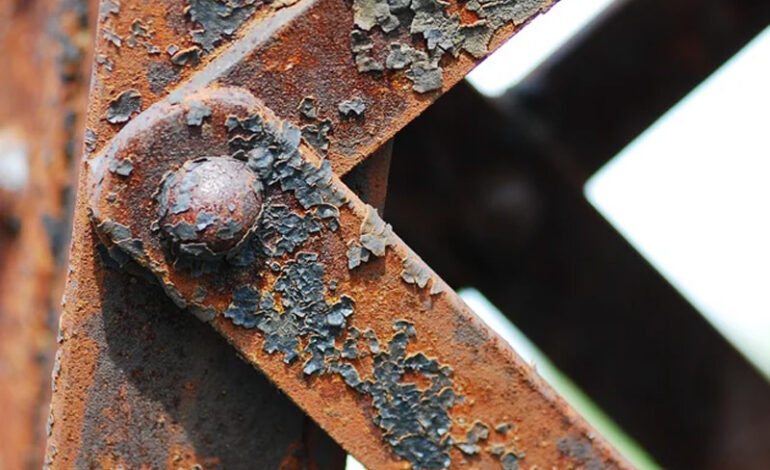
How Corrosion Prevention Protects Our Oceans

MARITIME · CORROSION PREVENTION
Corrosion prevention helps protect oceans by extending the service life of ships, ports, offshore platforms, and other marine infrastructure while reducing the risk of failures, pollution, waste, and unnecessary material replacement.
Originally published for World Maritime Day 2025 · Updated August 2026
AT A GLANCE
Why corrosion prevention matters
- Protects marine environments by reducing the risk of leaks, releases, and corrosion-related failures.
- Extends asset life and reduces premature replacement, waste, and material consumption.
- Supports safer operations across vessels, ports, offshore facilities, and naval infrastructure.
- Improves long-term performance through coatings, cathodic protection, inspection, monitoring, and maintenance.
- Creates consistency through technical standards and qualified professionals.
Every year, World Maritime Day highlights the essential role of the maritime industry in global trade, security, and sustainability. The 2025 theme, “Our Ocean – Our Obligation – Our Opportunity,” emphasized that protecting the ocean is not only an environmental responsibility, but also an economic and security priority.
At the Association for Materials Protection and Performance (AMPP), corrosion prevention is central to protecting the materials and infrastructure that support global transportation, commerce, energy, defense, and coastal communities.
Why Marine Environments Accelerate Corrosion
Marine assets operate in some of the most aggressive service environments in the world. Saltwater, oxygen, moisture, temperature changes, biological activity, and continuous exposure can accelerate the deterioration of metals and other materials used in ships, ports, pipelines, offshore platforms, and coastal infrastructure.
When corrosion is not properly managed, the effects can extend far beyond the damaged material itself.
ENVIRONMENT
Reducing environmental risk
Corrosion-related failures can increase the risk of leaks, releases, inefficient operation, and premature replacement. Effective prevention helps reduce those risks.
ECONOMICS
Protecting long-term investment
Corrosion can contribute to unplanned maintenance, downtime, repairs, and early replacement. Extending asset life helps organizations use materials and capital more efficiently.
SAFETY
Supporting maritime readiness
Reliable vessels, ports, offshore systems, and naval assets depend on materials that can perform in harsh conditions. Corrosion management supports safety and operational readiness.
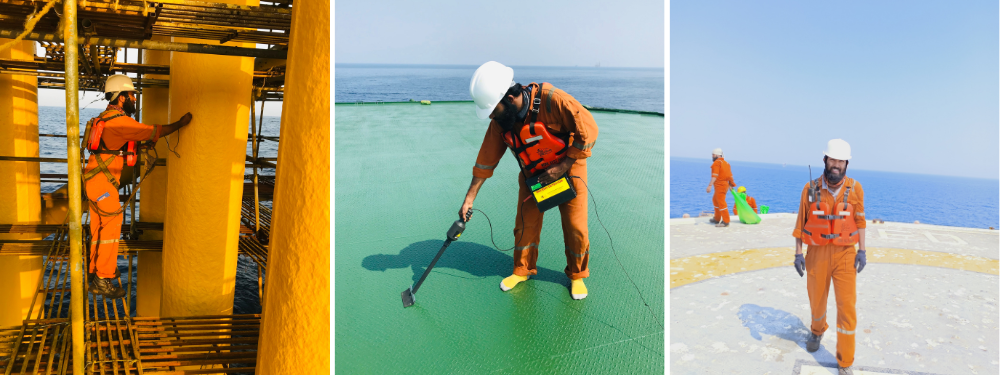
How Corrosion Prevention Helps Protect Oceans
Corrosion prevention is not a single technology. It is a coordinated approach that may include material selection, protective coatings, cathodic protection, inspection, monitoring, maintenance, and technical standards.
1. Reducing the risk of leaks and releases
Maintaining the integrity of vessels, tanks, pipelines, ports, and offshore structures helps reduce the likelihood of deterioration progressing to failure. Prevention and monitoring can help identify damage before it becomes a larger environmental or operational problem.
2. Extending the service life of marine assets
A vessel or structure that remains safely in service longer does not need to be repaired or replaced as quickly. That can reduce material consumption, construction demands, waste generation, and the resources associated with premature replacement.
3. Improving protective coating performance
Protective coatings create a barrier between a substrate and the surrounding environment. Their effectiveness depends on proper surface preparation, coating selection, application, inspection, and maintenance.
4. Supporting preventive inspection and maintenance
Inspection and corrosion monitoring help asset owners understand condition over time and identify areas requiring attention. Earlier intervention can prevent minor deterioration from becoming a more serious structural or environmental issue.
5. Advancing more sustainable technologies
Standards and technical guidance can support the development and adoption of new corrosion-control technologies by creating consistent terminology, requirements, and performance expectations.
TECHNICAL NOTE
Corrosion prevention is a system, not a single step.
Long-term performance depends on how materials, coatings, cathodic protection, inspection, maintenance, and qualified personnel work together throughout the life of an asset.
Standards That Strengthen the Maritime Industry
AMPP standards and certifications provide technical frameworks that support the protection of maritime infrastructure worldwide. One example is AMPP MR21506-2025: Universal Ultra-High Solids (UHS) and Solvent-Free (SF) Coatings Definition for the Maritime Industry.
AMPP MR21506-2025
What the standard does
- Establishes a unified definition of ultra-high-solids and solvent-free coatings for consistent use across the maritime industry.
- Supports the development of coating technologies intended to reduce solvent emissions while maintaining durability and performance.
- Creates a common technical foundation that can support sustainability goals without compromising safety, economics, or asset life.
By establishing consistent terminology and expectations, standards like MR21506-2025 help manufacturers, asset owners, applicators, inspectors, and other stakeholders evaluate technologies more consistently and make informed decisions.
From Standards to Action
Standards are one part of an effective corrosion-management strategy. Real-world performance also depends on qualified people, informed decision-making, and collaboration across the maritime sector.
- Global collaboration: AMPP works with organizations including the International Maritime Organization (IMO) to support conversations around corrosion prevention, coatings, infrastructure protection, and maritime performance.
- Workforce readiness: AMPP education and certifications help professionals build the knowledge and skills needed to select, apply, inspect, and maintain corrosion-control systems.
- Industry guidance: AMPP standards give asset owners, shipyards, operators, engineers, inspectors, applicators, and regulators technical frameworks for making informed decisions.
Protecting Marine Assets for the Future
Protecting the ocean requires attention not only to what enters the water, but also to the condition and performance of the infrastructure that operates within and around it. Effective corrosion prevention helps vessels and structures remain safe, reliable, and useful for longer.
Through technical standards, workforce development, industry collaboration, and the advancement of corrosion-control practices, AMPP helps the maritime community protect critical assets while supporting environmental stewardship and long-term resilience.
EXPLORE MORE
Keep Learning About Marine Corrosion
Explore AMPP Maritime Resources →
Browse AMPP Standards →
Explore Education & Certification →
Common Questions About Marine Corrosion Prevention
A few quick answers to common questions about corrosion and marine environments.
Why is corrosion more severe in marine environments?
Marine environments combine moisture, oxygen, salts, temperature changes, and other exposure conditions that can accelerate electrochemical corrosion processes and coating deterioration.
How do protective coatings help prevent marine corrosion?
Protective coatings help isolate a substrate from corrosive environmental exposure. Their performance depends on proper surface preparation, coating selection, application, inspection, and maintenance.
What is cathodic protection?
Cathodic protection is a corrosion-control method used to reduce corrosion of a metal surface by making that surface the cathode of an electrochemical cell. It is commonly used with pipelines, tanks, offshore structures, and other assets exposed to corrosive environments.
Why are corrosion standards important in the maritime industry?
Standards give manufacturers, asset owners, engineers, applicators, inspectors, and regulators shared terminology, procedures, and performance expectations. That consistency helps support safer and more predictable corrosion-control practices.
PROTECT. PERFORM. ADVANCE.
Build Your Maritime Corrosion Expertise
Explore AMPP standards, technical resources, education, and certifications for professionals protecting ships, ports, offshore infrastructure, and other marine assets.

Have photos or videos from the field? Submit them to AMPP →